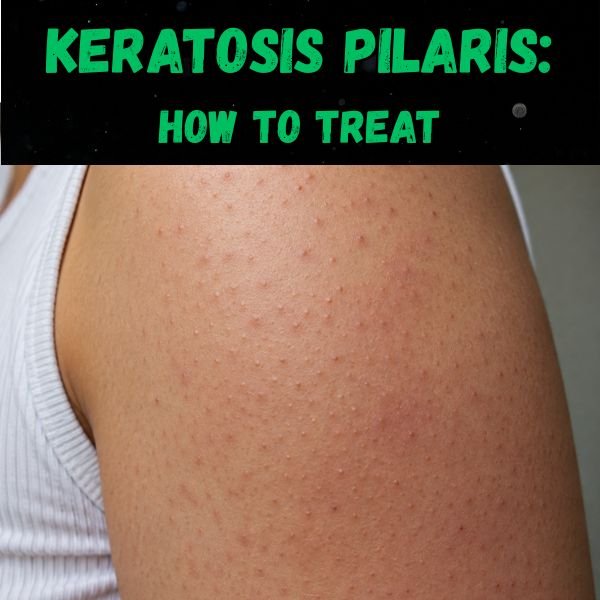
If you’ve noticed small, rough bumps on your skin that seem to never completely disappear, you may have keratosis pilaris. It’s a very common skin condition that often appears as tiny bumps on the upper arms, thighs, buttocks, or sometimes the cheeks.
People sometimes call it “chicken skin” because the bumps can make the skin look similar to the surface of a plucked chicken. While that name may not sound very appealing, keratosis pilaris is usually harmless and isn’t something you need to be embarrassed about.
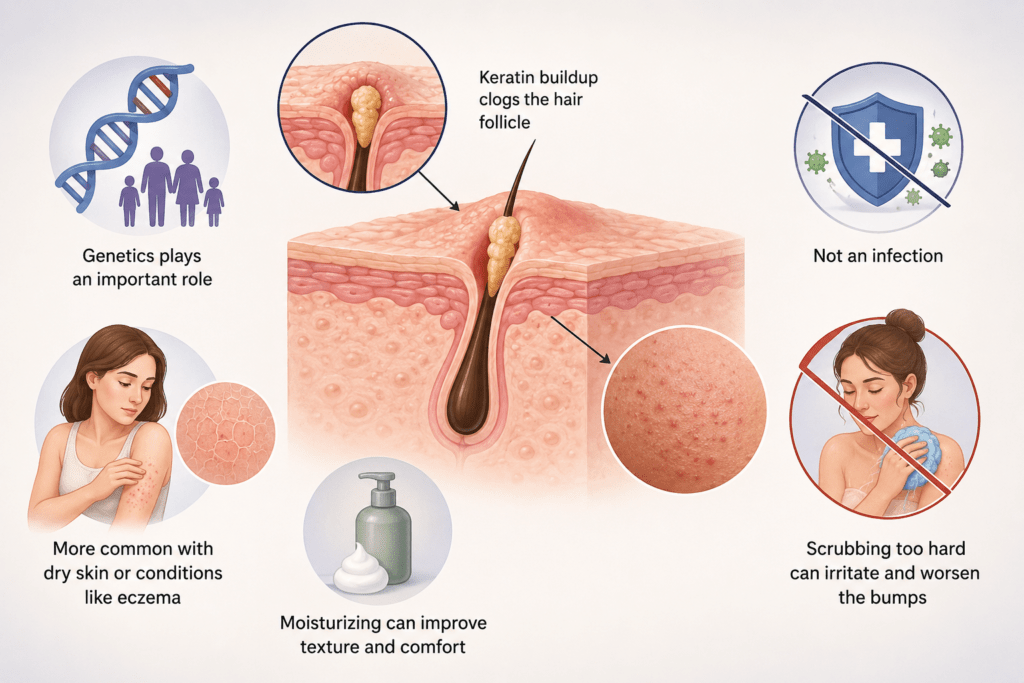
The bumps develop when keratin, a protein naturally found in your skin, builds up and blocks the openings of hair follicles. This creates the small, rough bumps that are typical of the condition.
Keratosis pilaris isn’t contagious, so you can’t catch it from another person. It also isn’t caused by poor hygiene. In many cases, it’s simply a combination of genetics and the way a person’s skin produces and sheds keratin.
The good news is that there are ways to make the skin feel smoother and the bumps less noticeable. In some people, keratosis pilaris also becomes less noticeable with age.
What Does Keratosis Pilaris Look and Feel Like?
The easiest way to recognize keratosis pilaris is by its appearance and texture. The skin may feel rough or bumpy, almost like very fine sandpaper.
The bumps are usually tiny and form around individual hair follicles. Depending on your skin tone, they may appear skin-colored, white, pink, red, brown, or darker than the surrounding skin.
Keratosis pilaris most commonly affects the upper arms and thighs, although it can also appear on the buttocks or face. Children may develop it on their cheeks.
For many people, the bumps don’t hurt. Some people may experience dryness or mild itching, especially when their skin is dry. The condition can also become more noticeable during colder months when dry air causes the skin to lose moisture.
It’s worth remembering that not every small bump on the skin is keratosis pilaris. Acne, eczema, folliculitis, and other skin conditions can sometimes look similar. If you’re unsure what you’re dealing with, a dermatologist can usually identify keratosis pilaris simply by examining your skin.
Keratosis Pilaris vs. Acne
It can be easy to mistake keratosis pilaris for acne, particularly when the bumps appear on the face, chest, or upper arms. However, they’re different conditions.
Keratosis pilaris happens when keratin blocks hair follicles. Acne, on the other hand, develops through a combination of factors involving oil, dead skin cells, bacteria, and inflammation.
KP bumps are typically small, dry, and rough. Acne is more likely to produce blackheads, whiteheads, pimples, or deeper, inflamed spots.
This difference matters because aggressive acne treatments or harsh scrubbing aren’t necessarily the best way to deal with keratosis pilaris. In fact, irritating the skin can sometimes make the bumps look worse.
What Causes Keratosis Pilaris?
The main culprit behind keratosis pilaris is keratin buildup.
Keratin is a protein that helps protect your skin. Normally, old skin cells are shed as new ones take their place. With keratosis pilaris, excess keratin can collect around the opening of a hair follicle and form a small plug.
That plug blocks the follicle and creates the familiar rough bump.
Why this happens isn’t completely understood, but genetics appears to play an important role. If someone in your family has keratosis pilaris, you’re more likely to develop it yourself.
KP is also more common in people who have dry skin or certain skin conditions, including eczema. This doesn’t mean that everyone with dry skin will develop KP, but keeping the skin moisturized can often make its texture look and feel better.
Importantly, keratosis pilaris isn’t an infection. You don’t develop it because your skin is dirty, and washing more aggressively won’t make it disappear. Scrubbing too hard can actually irritate the skin and make the bumps more noticeable.
Who Gets Keratosis Pilaris?
Keratosis pilaris can affect people of any age, but it is especially common in children, teenagers, and young adults.
For some people, it first becomes noticeable around puberty. Others may have had it since childhood without paying much attention to it.
There also appears to be a hereditary component. In simple terms, if your parents or other close family members have KP, you may be more likely to have it too.
The condition can affect people with different skin tones. However, the color of the bumps can vary considerably depending on the individual’s natural skin pigmentation. On lighter skin, KP may look pink or red, while on darker skin it can appear brown, purple, or darker than the surrounding skin.
One of the most encouraging things about KP is that it often becomes less noticeable over time. Some people find that their bumps improve during their teenage years or adulthood. Others continue to have them for many years.
So if you’ve had those rough bumps for a long time, you’re certainly not alone-and having KP doesn’t necessarily mean you’ll have the same level of bumps forever.
Is Keratosis Pilaris Dangerous?
The short answer is no. In most cases, keratosis pilaris is harmless.
KP isn’t a serious disease, it isn’t contagious, and it generally doesn’t cause permanent damage to your health. For most people, the biggest issue is simply how the skin looks or feels.
That said, the condition can sometimes be frustrating. You might feel self-conscious about wearing short sleeves or shorts, particularly if the bumps are very noticeable. Some people also experience dryness or itching.
The bigger problem can actually come from trying too hard to get rid of the bumps. Scratching, squeezing, picking, or aggressively exfoliating the skin can cause irritation and inflammation. This can leave the skin looking redder and feeling more uncomfortable.
It’s better to think of KP as a long-term skin condition that can usually be managed, rather than something dangerous that needs to be eliminated immediately.
If your bumps suddenly change, become very painful, develop significant swelling or discharge, or don’t look like typical KP, it’s worth talking with a doctor or dermatologist. Those symptoms may point to another skin problem that needs different treatment.
For typical keratosis pilaris, however, there is generally no reason to panic. It’s a common and harmless condition, and there are several ways to improve its appearance and texture.
Can Keratosis Pilaris Be Cured?
At this time, there isn’t a permanent cure for keratosis pilaris. However, that doesn’t mean you’re stuck with rough, bumpy skin forever.
The good news is that keratosis pilaris can often be managed. Treatments can soften the skin, reduce the buildup of keratin, and make the bumps much less noticeable.
It’s helpful to think of KP as a condition that you control rather than one you permanently eliminate. Some treatments work by removing excess dead skin cells, while others help keep the skin moisturized and reduce the rough texture.
Some ingredients like lactic acid, salicylic acid, urea, and others are used for managing KP.1
One important thing to understand is that results aren’t always immediate. You may need to use a treatment consistently for several weeks before you notice a meaningful improvement. And if you stop treatment, the bumps may gradually return.
So, while there isn’t currently a guaranteed way to permanently cure keratosis pilaris, there are plenty of ways to make it smoother, softer, and less noticeable.
Can Keratosis Pilaris Go Away on Its Own?
Yes, keratosis pilaris can go away or become much less noticeable over time.
In fact, many people find that KP naturally improves as they get older. It may become less obvious during adulthood, although this doesn’t happen for everyone.
Some people have KP for only a few years, while others continue to have it into adulthood. The condition can also come and go, becoming more noticeable during certain times of the year.
Dry weather can make keratosis pilaris worse. During winter, for example, cold outdoor air and dry indoor heating can reduce moisture in your skin. This can make existing bumps feel rougher and look more noticeable.
If your KP seems worse during the winter and better during warmer, more humid months, dryness may be part of the reason.
There’s no way to predict exactly when-or whether-your KP will disappear. But having it today doesn’t necessarily mean you’ll have the same bumps for the rest of your life.
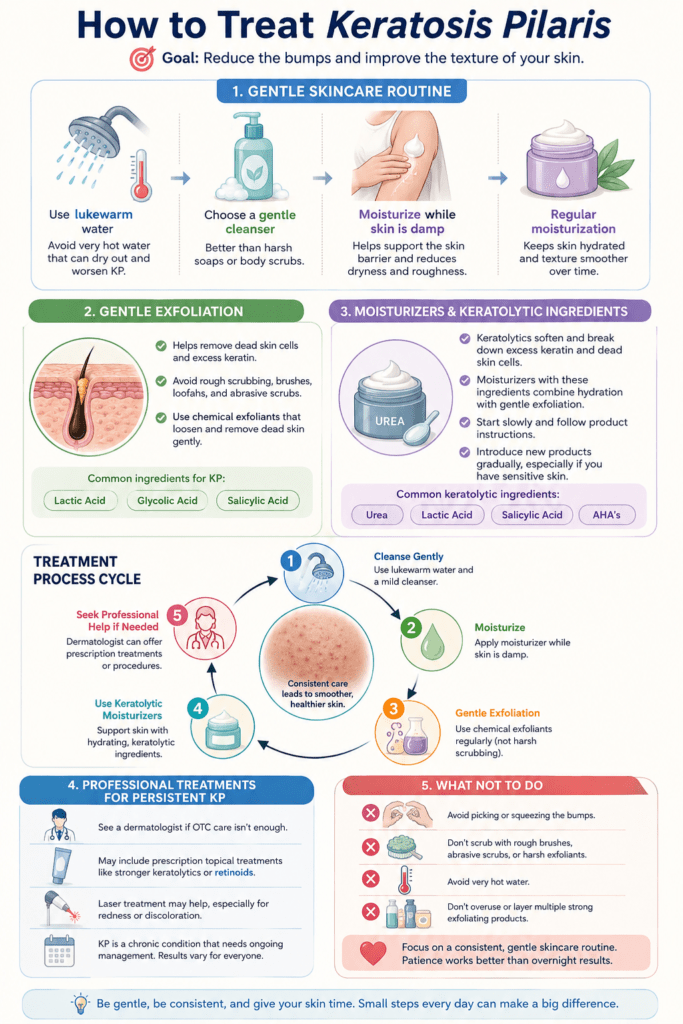
How to Treat Keratosis Pilaris
Since there isn’t a permanent cure, the goal of treatment is to reduce the bumps and improve the texture of your skin.
A simple skincare routine can go a long way. Start by treating your skin gently rather than trying to scrub the bumps away.
When showering or bathing, use lukewarm water instead of very hot water. Hot water can dry out your skin and potentially make KP more noticeable. A gentle cleanser is usually a better choice than a harsh soap or body scrub.
After bathing, apply a moisturizer while your skin is still slightly damp. Regular moisturization helps support the skin barrier and can reduce dryness and roughness.
Gentle Exfoliation
Exfoliation can help remove dead skin cells and excess keratin from the surface of the skin. But there’s an important distinction between gentle exfoliation and aggressive scrubbing.
You don’t need to attack the bumps with a rough brush, loofah, or abrasive scrub. Doing so can irritate the skin and potentially make redness worse.
Instead, products containing chemical exfoliants may be more useful for some people. These ingredients work to loosen and remove excess dead skin without requiring vigorous physical scrubbing.
Common ingredients used for KP include lactic acid, glycolic acid, and salicylic acid. These help soften and break down excess keratin and dead skin cells.
However, stronger isn’t always better. Using too much exfoliating acid can leave your skin dry, irritated, or uncomfortable. Start slowly and follow the product instructions.
If you have sensitive skin, it’s especially important to introduce new products gradually.
Professional Treatments for Persistent Keratosis Pilaris
If over-the-counter skincare isn’t helping enough, a dermatologist can recommend other options.
Depending on your skin and symptoms, a dermatologist may suggest prescription-strength topical treatments. These can include stronger keratolytic products or retinoids, which can help reduce the buildup of skin cells around hair follicles.
In some cases, dermatologists may also consider laser treatment, particularly when redness or discoloration is a major concern.
Professional treatments aren’t necessarily a permanent solution either. KP is often a condition that needs ongoing management, and the best approach can vary from person to person.
If your KP is particularly stubborn or is affecting your confidence, talking with a dermatologist can help you find an approach that’s appropriate for your skin.
What Not to Do for Keratosis Pilaris
When you’re dealing with rough bumps, it’s tempting to scrub them away as quickly as possible. Unfortunately, aggressive treatment can make KP worse.
Avoid picking or squeezing the bumps. Don’t repeatedly scrub the affected areas with rough brushes or harsh exfoliants, and don’t use extremely hot water in an attempt to soften the skin.
It’s also a good idea to avoid piling several strong exfoliating products on top of each other. Irritated skin can become dry, red, and uncomfortable, making the original problem harder to manage.
Instead, focus on a consistent, gentle skincare routine. With KP, patience usually works better than trying to remove the bumps overnight.
When Should You See a Doctor or Dermatologist?
You don’t necessarily need to see a doctor every time you notice small bumps on your skin. Typical keratosis pilaris is harmless and can often be managed at home.
However, it’s worth getting professional advice if you’re not sure whether the bumps are actually KP. Other skin conditions can have similar appearances, and the right treatment depends on the diagnosis.
You should also consider seeing a dermatologist if the bumps are painful, severely inflamed, unusually itchy, or changing in a way that doesn’t seem typical for your skin.
If you’ve tried a consistent skincare routine without seeing improvement, a dermatologist can also help. They may be able to recommend stronger treatments or determine whether another condition is contributing to the problem.
Most importantly, don’t feel that you have to live with skin that makes you uncomfortable. Even though KP isn’t dangerous, your comfort and confidence still matter.
Frequently Asked Questions
Is keratosis pilaris dangerous?
Usually, no. Keratosis pilaris is a harmless skin condition and generally doesn’t cause serious health problems. It isn’t contagious and isn’t an infection.
The main issues are usually cosmetic concerns, dryness, itching, or irritation.
Can keratosis pilaris be cured?
There is currently no permanent cure for keratosis pilaris. However, treatments can make the bumps smoother and less noticeable.
For some people, KP also becomes less noticeable naturally with age, so treatment may not always be necessary.
Can keratosis pilaris go away?
Yes. KP can improve or disappear naturally in some people, particularly as they get older. However, others may continue to experience it for years or into adulthood.
Even when it doesn’t completely disappear, appropriate skincare can often make it much less noticeable.
Is keratosis pilaris contagious?
No. Keratosis pilaris is not contagious. You cannot catch it from touching someone who has it.
It’s related to the way keratin builds up around hair follicles and is often associated with genetics.
What is the fastest way to get rid of keratosis pilaris?
There isn’t a guaranteed overnight treatment or instant cure for KP. A consistent routine using moisturizer and appropriate exfoliating ingredients can improve the appearance over time.
If your KP is persistent or severe, a dermatologist can recommend stronger treatment options.