If you’ve been diagnosed with acanthosis nigricans, you’ve probably searched for creams that can fade the dark, velvety patches on your skin. One treatment that often comes up is topical retinoids. These vitamin A-derived medications have been used for decades to treat acne, improve skin texture, and reduce certain types of pigmentation. But can they really help with acanthosis nigricans?
While topical retinoids for acanthosis nigricans may improve the appearance of thickened, dark skin, they aren’t a cure.
Because acanthosis nigricans is commonly linked to insulin resistance and type 2 diabetes, improving your overall health can make topical treatments more effective.
Let me tell you whether topical retinoids really work, which retinoid is best, how long they take to show results, how to use them safely, and when it’s time to see a dermatologist.
How Do Topical Retinoids Work?
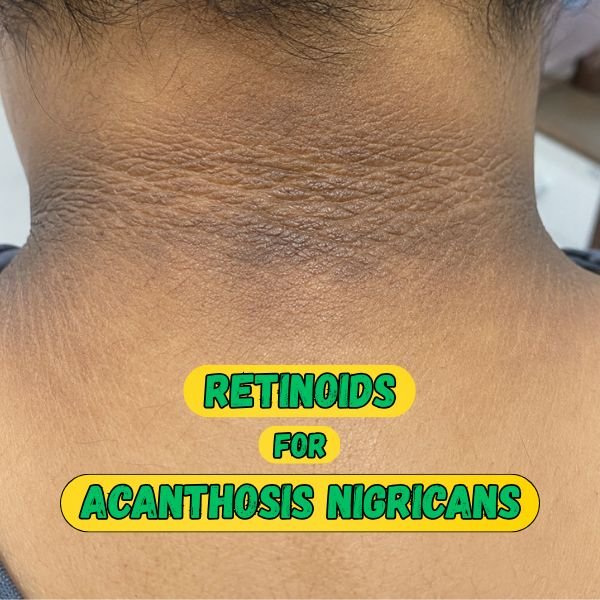
Acanthosis nigricans is a skin condition that causes patches of skin to become darker, thicker, and feel velvety. It most often appears on areas where skin folds together, including the:
- Neck
- Underarms
- Groin
- Elbows
- Knees
- Knuckles
Although the condition itself isn’t dangerous, it often signals an underlying health problem. Insulin resistance is the most common cause, but hormonal disorders, certain medications, obesity, and, in rare cases, some cancers can also trigger it.
Why Does the Skin Become Dark and Thick?
Normally, skin cells grow, mature, and shed in a balanced cycle. In acanthosis nigricans, this process speeds up. Excess insulin stimulates skin cells to multiply more rapidly, leading to a buildup of thickened skin and increased pigmentation.
That’s why simply scrubbing the affected area or using whitening products usually doesn’t work. The problem starts beneath the skin’s surface.
How Do Topical Retinoids Work?
Topical retinoids are medications derived from vitamin A. They help normalize how skin cells grow and shed by increasing cell turnover. As older skin cells are replaced with newer ones, the affected area may gradually become smoother and lighter.
Retinoids may help:
- Reduce hyperkeratosis (skin thickening)
- Improve hyperpigmentation
- Smooth rough skin texture
- Increase skin cell turnover
- Enhance penetration of other topical treatments
It’s important to understand that these medications improve the skin’s appearance but don’t correct the metabolic problems causing acanthosis nigricans.
Do Topical Retinoids Really Work for Acanthosis Nigricans?
The short answer is yes-but with realistic expectations.
Several clinical studies and case reports suggest that topical retinoids can noticeably improve the appearance of acanthosis nigricans, particularly in mild to moderate cases. They work best by reducing the thickness of the skin and gradually fading excess pigmentation over time.1
However, results vary from person to person. Someone with mild insulin resistance and recent skin changes may see improvement faster than someone with long-standing or severe acanthosis nigricans.
Do Topical Retinoids Treat the Cause?
No.
They improve the visible skin changes but don’t fix the underlying cause, such as insulin resistance or hormonal imbalance. If those conditions remain unmanaged, the dark patches are more likely to persist or return.
Who Benefits the Most?
People with obesity-related or insulin resistance-related acanthosis nigricans often experience the greatest improvement when they combine topical retinoids with lifestyle changes and medical treatment.
Topical retinoids can significantly improve the appearance of acanthosis nigricans, but they’re most effective as part of a broader treatment plan that addresses the underlying cause.
Which Topical Retinoid Is Best for Acanthosis Nigricans?
Not all retinoids are equally effective or equally tolerated. The best choice depends on the severity of your skin changes, how sensitive your skin is, and your dermatologist’s recommendation.
The three retinoids most commonly considered are tretinoin, adapalene, and tazarotene.
Comparison of Common Topical Retinoids
| Feature | Tretinoin | Adapalene | Tazarotene |
|---|---|---|---|
| Clinical evidence | Excellent | Moderate | Limited |
| Effectiveness | High | Moderate | High |
| Irritation risk | Moderate | Low | High |
| Best suited for | Most patients | Sensitive skin | Resistant cases |
Tretinoin is the most widely studied retinoid for treating acanthosis nigricans. It speeds up skin cell turnover, helping thickened skin shed more efficiently while gradually reducing pigmentation.
Which Retinoid Should You Choose?
For most people, tretinoin offers the best balance of effectiveness and clinical evidence. If your skin becomes easily irritated, adapalene may be a better starting point. Tazarotene is generally reserved for more difficult cases under the guidance of a dermatologist.
What Concentration of Tretinoin Should You Use for Acanthosis Nigricans?
Choosing the right strength is just as important as choosing the right medication. Using a concentration that’s too strong too soon can cause irritation, while a weaker strength may require more patience before noticeable improvement appears.
0.025% Tretinoin
This lower strength is often recommended for beginners or people with sensitive skin. It helps your skin adjust gradually while reducing the risk of excessive peeling and redness.
0.05% Tretinoin
For many patients, 0.05% tretinoin provides a good balance between effectiveness and tolerability. It’s one of the most commonly prescribed strengths for acanthosis nigricans.
0.1% Tretinoin
This higher concentration may work more quickly in some cases, but it’s also more likely to cause irritation. It’s usually reserved for people who have already tolerated lower strengths without significant side effects.
Should Beginners Start with a Lower Concentration?
Yes. Starting with a lower strength and applying it every other night allows your skin to adapt gradually. Once irritation is minimal, your dermatologist may recommend increasing either the concentration or the frequency of application.
Does a Stronger Concentration Work Faster?
Not always.
A stronger retinoid can increase irritation, causing people to stop treatment early. Consistent use of a well-tolerated strength often produces better long-term results than an aggressive regimen that can’t be maintained.
How Long Does It Take for Topical Retinoids to Work for Acanthosis Nigricans?
One of the biggest mistakes people make is expecting dramatic results within a few weeks. Like most treatments that affect skin cell turnover, topical retinoids require patience.
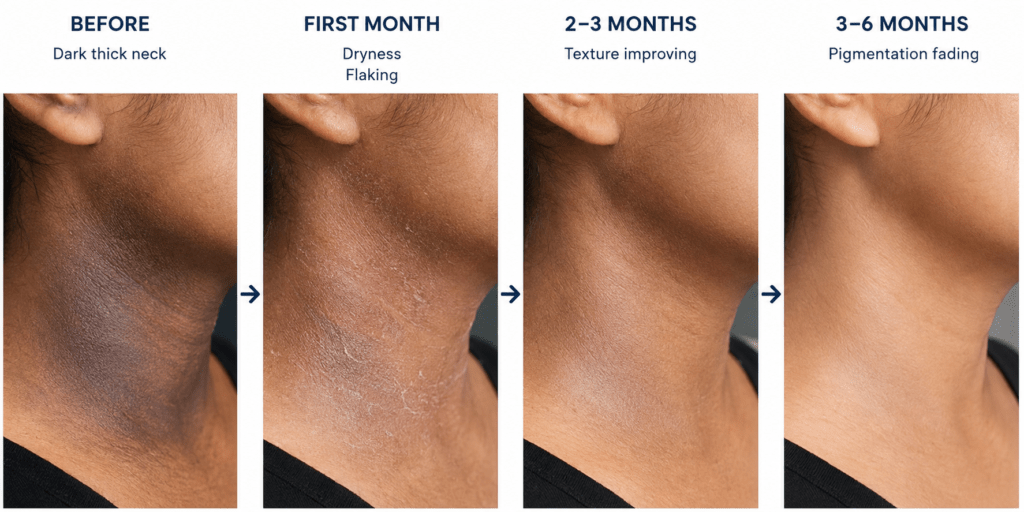
During the first month, you may notice mild dryness, peeling, or irritation. This adjustment period is common and doesn’t necessarily mean the treatment isn’t working.
Between 8 and 12 weeks, many people begin to see smoother skin and subtle fading of dark patches. More noticeable improvements often develop after three to six months of consistent use.
Several factors influence your results, including the thickness of the affected skin, the severity of insulin resistance, how consistently you apply the medication, and whether you’re also addressing underlying health conditions.
Remember that gradual improvement is normal. Consistency and realistic expectations are key to getting the best results with topical retinoids for acanthosis nigricans.
Can You Combine Topical Retinoids with Other Treatments for Acanthosis Nigricans?
Yes. In fact, dermatologists often combine topical retinoids for acanthosis nigricans with other skincare ingredients to improve results. While retinoids help normalize skin cell turnover, other products can hydrate the skin, gently exfoliate thickened areas, or reduce irritation.
The key is introducing products slowly. Using too many active ingredients at once can leave your skin dry, red, or irritated.
Topical Retinoids and Glycolic Acid
Glycolic acid is an alpha hydroxy acid (AHA) that exfoliates dead skin cells and helps smooth rough patches.
When paired with tretinoin, it may:
- Improve skin texture faster
- Help fade dark patches
- Increase skin cell turnover
However, using both on the same night may cause excessive irritation. Many dermatologists recommend alternating them-for example, tretinoin one night and glycolic acid the next.
Topical Retinoids and Urea Cream
Urea cream is one of the safest products to combine with retinoids.
It works by:
- Softening thickened skin
- Increasing hydration
- Reducing roughness
- Improving skin barrier function
For people with very dry or thick acanthosis nigricans, adding a moisturizer containing 10-20% urea can make retinoid treatment much more comfortable.
Topical Retinoids and Salicylic Acid
Salicylic acid helps loosen dead skin cells and may improve thick, rough patches.
Although it can be combined with retinoids, both products exfoliate the skin. Using them together too frequently may increase dryness, peeling, burning, redness.
If your skin is sensitive, alternate their use instead of applying them at the same time.
Topical Retinoids and Niacinamide
Niacinamide is one of the best companions for topical retinoids.
It helps:
- Strengthen the skin barrier
- Reduce redness
- Calm irritation
- Improve hydration
Unlike many active ingredients, niacinamide is generally gentle enough to use every day.
Topical Retinoids and Hydroquinone
For stubborn pigmentation, some dermatologists prescribe hydroquinone along with tretinoin.
Hydroquinone reduces melanin production, while tretinoin speeds up skin cell turnover. Together, they may improve discoloration more effectively than either treatment alone.
Because hydroquinone isn’t suitable for long-term use, always follow your dermatologist’s instructions.
Which Combinations Should You Avoid?
Avoid combining multiple strong exfoliating products without medical advice.
Examples include:
- Tretinoin + glycolic acid every night
- Tretinoin + multiple exfoliating acids
- Retinoids + abrasive scrubs
- Alcohol-based toners with retinoids
Using too many irritating products often slows healing instead of improving it.
Side Effects of Topical Retinoids for Acanthosis Nigricans
Like all medications, topical retinoids can cause side effects. Fortunately, most are mild and improve as your skin adjusts.
The most common side effects occur during the first few weeks of treatment.
- Dryness
- Peeling
- Burning or Stinging
- Redness and Irritation
- Temporary Darkening
- Increased Sun Sensitivity
How to Minimize Side Effects
Most people tolerate topical retinoids well by following a few simple habits:
- Start slowly.
- Use only a pea-sized amount.
- Apply to completely dry skin.
- Moisturize regularly.
- Avoid over-exfoliating.
- Be patient during the adjustment period.
Can Topical Retinoids Completely Remove Acanthosis Nigricans?
The honest answer is usually not.
Topical retinoids can significantly improve skin texture and reduce pigmentation, but they rarely eliminate acanthosis nigricans permanently.
Whether the condition clears depends largely on what’s causing it.
If insulin resistance improves through weight management, healthy eating, exercise, or medical treatment, the skin often improves as well.
If the underlying problem continues, the dark patches may persist despite using topical medications.
Setting Realistic Expectations
Think of topical retinoids as one part of a larger treatment plan rather than a standalone cure.
Most people experience:
- Smoother skin
- Reduced thickening
- Gradual fading of pigmentation
- Better overall skin appearance
Complete clearance is less common.
Will Acanthosis Nigricans Come Back After Stopping Topical Retinoids?
Unfortunately, it can.
Retinoids help control the visible changes, but they don’t permanently alter the factors causing the condition.
Recurrence is more likely if:
- Weight increases
- Insulin resistance worsens
- Diabetes becomes uncontrolled
- PCOS remains untreated
- Retinoid therapy is stopped without addressing the underlying cause
Some people benefit from maintenance treatment, such as applying a retinoid a few nights each week after achieving improvement.
Your dermatologist can help determine whether long-term maintenance is appropriate.
When Should You See a Dermatologist Instead of Continuing Home Treatment?
Although mild cases may improve with prescription creams and lifestyle changes, some situations require professional evaluation.
You should schedule an appointment if:
- There’s little or no improvement after three to six months.
- The affected skin spreads rapidly.
- The area becomes painful, ulcerated, or starts bleeding.
- Severe irritation develops from treatment.
- You’re unsure whether the diagnosis is actually acanthosis nigricans.
A dermatologist can confirm the diagnosis and recommend stronger treatments if necessary.
Could It Be Something More Serious?
Rarely, acanthosis nigricans develops suddenly, spreads quickly, or affects unusual areas such as the mouth or palms.
These cases may require additional testing because they can occasionally be associated with an underlying medical condition that needs prompt attention.
Lifestyle Changes That Improve Topical Retinoid Results
Even the best skincare routine has limits if the underlying cause isn’t addressed.
For many people, healthy lifestyle changes make the biggest difference in both treatment success and long-term prevention.
- Maintain a Healthy Weight
- Losing excess weight may improve insulin sensitivity and reduce the progression of acanthosis nigricans.
- Improve Blood Sugar Control
- If you have prediabetes or diabetes, keeping blood sugar within your target range can help reduce ongoing skin changes.
- Eat a Balanced Diet
- Choose foods rich in vegetables, fruits, whole grains, lean protein, and healthy fats while limiting highly processed foods and sugary drinks.
- Stay Physically Active
- Regular exercise improves insulin sensitivity and supports long-term skin health.
- Build a Gentle Skincare Routine
- Use mild cleansers, moisturize regularly, avoid harsh scrubbing, and follow your dermatologist’s instructions for retinoid use.
Remember that healthy skin reflects overall health. Combining topical retinoids for acanthosis nigricans with lifestyle improvements often produces better and longer-lasting results than relying on skincare products alone.
Frequently Asked Questions
Can tretinoin remove acanthosis nigricans?
Tretinoin can improve skin texture and pigmentation, but it doesn’t permanently cure the condition.
Is adapalene effective for acanthosis nigricans?
Yes. It may help improve mild cases and is often better tolerated than tretinoin.
How long should I use topical retinoids?
Many people use them for several months before seeing significant improvement. Follow your dermatologist’s recommendations for long-term use.
Can I use tretinoin every day?
Many people eventually do, but beginners should usually start every other night to reduce irritation.
What is the best cream for acanthosis nigricans?
There’s no single best cream. Tretinoin is one of the most commonly prescribed topical treatments, but the ideal choice depends on your skin and underlying condition.
Does acanthosis nigricans come back after treatment?
Yes. It can return if the underlying cause isn’t managed or if treatment is stopped.
Can I use glycolic acid and tretinoin together?
Yes, but alternating their use is often the safest approach to reduce irritation.
Is tretinoin safe for the neck and underarms?
Yes. These are common treatment areas, but they may be more sensitive and require careful application.
Why is my skin darker after using tretinoin?
Temporary irritation can sometimes make pigmentation appear darker before improvement occurs.
Can topical retinoids cure acanthosis nigricans permanently?
No. They improve the skin’s appearance but don’t permanently eliminate the underlying condition.