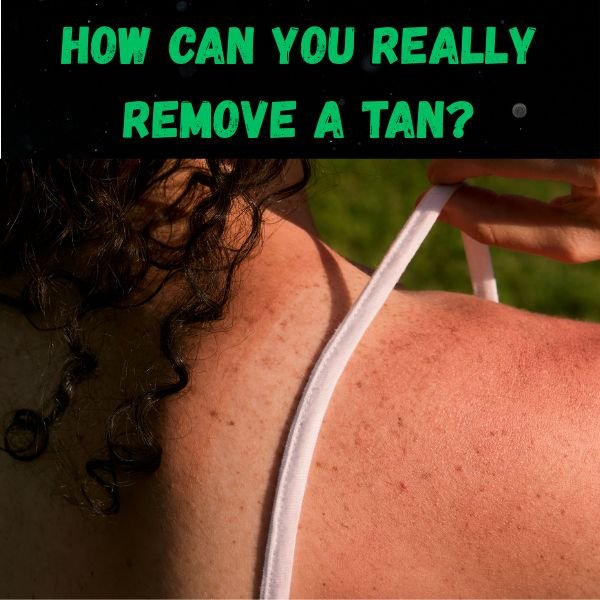
You’ve probably noticed it before. You spend a few hours outside, come home, look in the mirror, and realize your skin looks darker than it did that morning.
Maybe you call it a sun tan. Maybe you immediately start searching for the best tanning removal cream or tan removal soap.
But here’s the part that often gets misunderstood: a tan isn’t dirt sitting on the surface of your skin.
When your skin is exposed to ultraviolet, or UV, radiation from the sun, your body responds by producing more melanin. Melanin is the natural pigment responsible for much of your skin, hair, and eye color.
Think of melanin as part of your skin’s natural defense system. When your skin detects UV exposure, pigment-producing cells called melanocytes become more active and produce more melanin. That extra pigment can make your skin appear darker.
There are different types of tanning responses. Some changes in pigmentation can happen relatively quickly after exposure, while delayed tanning becomes more noticeable over the following days. The exact response varies from person to person and depends partly on skin type and the amount of UV exposure.
So when you look at a darker area and think, “I need to scrub this tan off,” what’s really happening is more complicated.
Your skin has responded to UV exposure by changing its pigment production.
And that’s why the idea of instantly “removing” a tan can be misleading.
Is Tanning Actually Safe?
A tan can look healthy or attractive, but tanning itself is a sign that your skin has been exposed to UV radiation.
The American Academy of Dermatology’s position is straightforward: there is no safe way to tan.1 UV exposure can contribute to premature skin aging and increase the risk of skin cancer.
That doesn’t mean you should panic every time you spend a few minutes outside. Sunlight is a normal part of everyday life.
The concern is repeated, unprotected UV exposure-especially intentional tanning or indoor tanning.
So if your goal is to fade an existing tan, one of the most important things you can do is also the least exciting: stop adding more UV exposure while your skin recovers.
Why Does a Tan Look Different on Different Skin Tones?
Not everyone’s skin reacts to sunlight in exactly the same way.
Some people burn quickly and may develop little visible tanning. Others tan more easily and develop a deeper, longer-lasting change in skin color.
This is largely related to differences in melanin and how individual skin responds to UV radiation.
You may also notice that tanning isn’t always even. Your forehead might look darker than your cheeks. Your neck might have a different shade from your face. Your hands and arms may become noticeably darker than areas normally covered by clothing.
This uneven appearance can make people especially interested in tan removal for the face.
There’s another detail worth knowing: visible light can also contribute to pigmentation, particularly in people with darker skin tones and those who are prone to pigmentation problems. This is one reason dermatologists may recommend tinted sunscreens containing iron oxides for certain pigmentation concerns.
In other words, protecting your skin from pigmentation isn’t simply about avoiding the obvious midday sun.
Daily exposure while driving, walking, sitting near windows, or spending short periods outdoors can add up too.
Sun-Tanned Skin vs. Hyperpigmentation: They’re Not Always the Same Thing
Here’s where things get interesting.
You might look at your skin and say, “I’ve got a tan.“
But sometimes what looks like a tan is actually another type of hyperpigmentation.
Hyperpigmentation simply means that some areas of skin have become darker than the surrounding skin. It can have many causes.
For example, darker areas could be related to:
- Recent sun exposure
- Freckles
- Sun spots or solar lentigines
- Post-inflammatory hyperpigmentation
- Melasma
- Other pigmentation disorders
That’s important because the best treatment depends on what is actually causing the color change.
A product marketed as a “tan remover” may not be the right solution for melasma, for example. And repeatedly exfoliating a pigmentation problem without knowing what it is can potentially irritate your skin and make things more complicated.
This is particularly relevant when the darkening is patchy, persistent, or keeps returning even when you’re avoiding the sun.
A simple tan often gradually fades as the skin’s pigment response settles and the affected skin is replaced over time.
A pigmentation disorder may behave very differently.
So before asking, “Which cream removes tan fastest?“, a better question is:
“Is this actually a tan?”
Tanning on the Face Is a Different Problem
The face tends to be one of the first places people notice tanning.
That’s not surprising. Your face is exposed to sunlight almost every day, even when you aren’t deliberately spending time outdoors.
You might walk to work, drive to the store, sit outside for lunch, or spend a few minutes running errands. None of these activities may feel like “sunbathing,” but they still expose your skin to UV radiation.
Over time, that exposure can contribute to facial tanning and pigmentation.
There’s another reason facial tanning can be frustrating: your face may not darken evenly.
You could end up with darker areas on the forehead, cheeks, nose, or upper lip while other areas remain closer to your natural skin tone.
And sometimes what appears to be facial tanning is actually melasma.
Melasma commonly causes brown or gray-brown patches on the face and can become worse with sun and visible-light exposure. Treating it like an ordinary tan may therefore produce disappointing results.
Why Does Your Face Sometimes Look Darker Than Your Body?
There isn’t always one reason.
Your face receives regular sun exposure, while much of your body is covered by clothing. You may also forget to apply sunscreen to certain areas or fail to reapply it during the day.
Then there are factors such as existing pigmentation, acne marks, irritation, and hormonal influences that can make facial discoloration more complicated.
That’s why tanning on the face deserves a slightly different approach from simply trying to brighten the skin as quickly as possible.
If your facial pigmentation is symmetrical, persistent, or keeps coming back, it may be worth having a dermatologist look at it rather than assuming it’s just a tan.
Can You Remove a Tan With a Tanning Removal Cream?
This is probably one of the biggest questions people have.
The honest answer is: some topical products can help fade excess pigmentation, but a cream can’t magically erase a tan overnight.
The phrase “tan removal cream” covers a huge range of products.
Some contain ingredients designed to exfoliate the skin. Others contain ingredients that may help reduce the appearance of pigmentation or even out skin tone.
Depending on the product, you may see ingredients such as niacinamide, vitamin C, retinoids, azelaic acid, or alpha-hydroxy acids.
These ingredients don’t all work in the same way.
Some help with skin-cell turnover. Others affect pigmentation pathways. Some mainly improve the overall appearance and texture of the skin.
The important thing is not to assume that a longer ingredient list automatically means a better product.
And there’s a bigger issue:
If you continue exposing your skin to UV radiation, you’re working against your own treatment.
Sun protection is an important part of managing sun-related pigmentation because continued UV exposure can contribute to additional pigmentation and other forms of skin damage.
So think of a tan-fading cream as one possible part of a broader approach-not a magic eraser.
What Makes a Tan-Fading Cream Worth Considering?
Look beyond phrases such as “instant tan removal” or “fairness in seven days.”
A more sensible approach is to consider what active ingredients the product contains, whether those ingredients have a reasonable evidence base, whether the product is appropriate for your skin, and whether you’re using sun protection alongside it.
You also need to pay attention to irritation.
If a product makes your skin extremely dry, stings badly, or leaves you red and inflamed, using more of it isn’t necessarily going to produce faster results.
In fact, skin irritation can make some pigmentation problems worse.
The goal isn’t to attack your skin until the darker color disappears.
The goal is to help the skin gradually return to a more even appearance while keeping the skin barrier healthy.
What About Tanning Removal Soap?
A tan removal soap sounds appealing because it’s simple.
Wash your face or body, rinse it off, and supposedly the tan disappears.
Unfortunately, skin biology doesn’t work quite that neatly.
A tanning removal soap or brightening cleanser may help cleanse the skin and, depending on its ingredients, provide some mild exfoliating or brightening effects. But it’s important to remember that a cleanser is a wash-off product.
It typically stays on your skin for a relatively short period before you rinse it away.
That makes it very different from a leave-on cream or serum that remains in contact with the skin.
So be skeptical of claims that a soap can dramatically remove a deep tan in a few days.
Is a Tan Removal Soap Better Than a Cream?
Not necessarily.
A soap’s main job is to clean the skin. A leave-on product can be formulated to deliver active ingredients for longer contact with the skin.
That doesn’t mean every cream will work better than every soap. Formulation, ingredients, concentration, skin type, and the actual cause of the pigmentation all matter.
What you shouldn’t do is assume that a stronger soap will produce faster results.
If a cleanser leaves your skin tight, dry, burning, or irritated, that’s a sign that your routine may be too aggressive.
Why Scrubbing Your Tan Away Can Backfire
This is where the desire for quick results can cause problems.
You see darker skin, so you scrub.
Then you scrub harder because the first attempt didn’t work.
Maybe you add a rough body scrub, a loofah, an exfoliating glove, or another strong product.
The problem is that a tan isn’t simply a layer of dead skin waiting to be scrubbed away.
The pigment change is happening within the skin.
Aggressive scrubbing may remove some surface dead skin cells, but it can’t simply scrub away the biological response that produced the pigment.
Worse, excessive friction can irritate your skin.
And irritated skin can develop post-inflammatory hyperpigmentation, particularly in people whose skin is prone to pigmentation.
So you can end up in an annoying cycle:
Sun exposure → pigmentation → aggressive scrubbing → irritation → more pigmentation.
That’s the exact opposite of what you’re trying to achieve.
This is why a gentle approach usually makes more sense than attacking the skin with increasingly harsh products.
How Long Does a Sun Tan Take to Fade?
There’s no universal answer.
A mild tan may become less noticeable relatively quickly, while a deeper or repeated tan can take considerably longer.
How quickly it fades depends on several factors, including your natural skin tone, how much UV exposure you received, whether you’re continuing to spend time in the sun, and how your individual skin produces and sheds pigment.
And remember: not every dark area is a simple tan.
If the pigmentation is actually melasma, a sun spot, or post-inflammatory hyperpigmentation, it may persist much longer than you would expect from an ordinary tan.
The most important thing you can do while waiting for pigmentation to fade is to prevent additional UV exposure.
Otherwise, you’re essentially asking your skin to fade existing pigment while repeatedly giving it a reason to produce more.
How to Fade Sun-Tanned Skin Without Making It Worse
If you’re trying to get rid of a tan, sunscreen might seem like a strange recommendation.
After all, you’re looking for something that removes the darker color-not something that prevents sunburn.
But here’s the catch: if you keep exposing your skin to UV radiation, your skin can continue producing pigment while you’re trying to fade the existing tan.
That’s why sun protection is one of the most important parts of any tan-fading routine.
Choose a broad-spectrum sunscreen with SPF 30 or higher and apply it to exposed skin. If you’re spending significant time outdoors, reapply as directed, particularly after sweating or swimming. Hats, clothing, shade, and avoiding unnecessary midday sun exposure can provide additional protection.
This isn’t just about making your tan fade faster. Regular sun protection also helps reduce ongoing UV damage, premature skin aging, and the risk of skin cancer.
And don’t make the mistake of thinking sunscreen is only necessary on days when you’re going to the beach.
If you’re trying to improve facial pigmentation, everyday exposure matters too.
What Is the Best Treatment for Sun-Tanned Skin?
There isn’t one treatment that’s best for everyone.
For a straightforward tan, the simplest approach is often:
Sun protection → gentle skincare → patience → gradual fading.
Your skin naturally sheds old cells and replaces them over time. Once you’re no longer continually stimulating excess pigment production with UV exposure, the darker appearance can gradually become less noticeable.
You can support this process with a gentle skincare routine.
A moisturizer helps maintain the skin barrier, while carefully chosen active ingredients may help improve uneven pigmentation and skin texture.
Depending on your skin and the cause of the discoloration, ingredients such as niacinamide, vitamin C, azelaic acid, retinoids, or alpha-hydroxy acids may be considered.
But don’t use all of them at once.
Adding several powerful ingredients because you want faster results can leave your skin irritated. And irritation isn’t your friend when you’re trying to improve pigmentation.
A better approach is to introduce one appropriate active at a time and give your skin a chance to adjust.
Tanning Treatment by a Dermatologist: What Are the Options?
If your skin remains noticeably darker for a long time, the pigmentation is uneven, or you’re simply not sure whether you’re dealing with a tan, a dermatologist can be extremely helpful.
The first step isn’t necessarily a laser or a prescription cream.
It’s figuring out what you’re actually treating.
A dermatologist can examine your skin and determine whether the discoloration looks like ordinary tanning, melasma, post-inflammatory hyperpigmentation, sun spots, or another condition.
That distinction matters because treatments that work for one type of pigmentation may not be appropriate for another.
Prescription Topical Treatments
Depending on the diagnosis, a dermatologist may recommend a prescription-strength topical treatment.
These treatments can include certain retinoids or other medications designed to improve pigmentation or skin turnover.
The exact treatment depends on factors such as the type of pigmentation, its location, your skin type, and your medical history.
This is one reason it’s better not to copy someone else’s prescription skincare routine from social media.
What works well for one person’s pigmentation may irritate another person’s skin.
Chemical Peels
A chemical peel uses a controlled chemical solution to remove or loosen layers of damaged or pigmented skin.
Depending on the type and strength of the peel, it may help improve uneven pigmentation and overall skin texture.
But a chemical peel isn’t simply a stronger version of a face wash.
If the peel is too strong, used too frequently, or poorly matched to your skin, irritation can occur-and irritation can sometimes lead to post-inflammatory hyperpigmentation.
This is especially important for people with medium, brown, or dark skin tones, who may be more prone to pigment changes after inflammation.
For that reason, professional assessment matters when you’re considering stronger peels for pigmentation.
Microdermabrasion
Microdermabrasion is a procedure that mechanically exfoliates the outermost layer of the skin.
It may improve some surface-level signs of sun damage and make the skin appear smoother.
However, it’s not a magic “tan eraser.”
If the darker color comes from pigment deeper in the skin, simply removing surface cells won’t necessarily eliminate it.
The treatment may be more useful as part of an overall approach to certain forms of sun damage rather than as a one-time solution for every tan.
IPL and Laser Treatments
For certain types of pigmentation and sun damage, dermatologists may use intense pulsed light (IPL) or laser treatments.
These treatments work differently from creams and cleansers and can target specific types of pigmentation.
But here’s something you shouldn’t overlook: more powerful doesn’t automatically mean better.
Laser and light-based treatments need to be selected carefully, particularly for darker skin tones. The wrong treatment or settings can potentially cause burns or unwanted changes in pigmentation.
A dermatologist may therefore decide that a topical treatment or another approach is safer and more appropriate.
The American Academy of Dermatology lists prescription retinoids, microdermabrasion, IPL, and laser treatments among options dermatologists may use for certain types of sun-damaged skin.
How Effective Are Dermatologist Treatments?
This is where you should be suspicious of anyone promising to remove “100% of your tan” in a single session.
The effectiveness of a treatment depends heavily on what is causing the pigmentation.
A treatment that works well for a superficial sun spot may not be the right treatment for melasma. A treatment that improves certain signs of photoaging may not make a simple tan disappear overnight.
Your dermatologist may also combine treatments.
For example, professional treatment might be paired with a carefully chosen topical product and consistent sunscreen use.
And there’s one rule that applies to almost everything:
You can’t treat sun damage effectively while continuing to repeatedly damage the skin with UV exposure.
Even after successful treatment, continued sun exposure can encourage further pigmentation and other forms of sun damage.
So the goal isn’t simply to remove today’s tan.
It’s to stop the cycle that keeps producing unwanted pigmentation.
What If the “Tan” Is Actually Melasma?
This is particularly important when you’re dealing with tanning on the face.
Melasma is a common pigmentation condition that can cause brown or gray-brown patches, especially on areas such as the cheeks, forehead, nose, and upper lip.
It can look like a stubborn tan.
But unlike a simple tan that gradually fades after sun exposure stops, melasma can persist and repeatedly become darker.
Sun exposure and visible light can make melasma worse, which is why sun protection plays such an important role in managing it.
If you’ve been using tan-removal products for weeks or months and the same facial patches keep coming back, it’s worth asking whether you’re actually dealing with melasma or another pigmentation problem.
A dermatologist can help make that distinction.
Beware of “Instant Tan Removal” and Skin-Lightening Claims
The internet is full of products promising dramatic results.
You may see claims such as:
“Remove your tan overnight.”
“Get your original skin tone back in seven days.”
“Permanent whitening.”
Be careful.
There is a big difference between treating unwanted pigmentation and trying to dramatically lighten your natural skin color.
Some unregulated or poorly formulated skin-lightening products may contain ingredients that can cause significant problems.
For example, the FDA has raised safety concerns about over-the-counter skin-lightening products containing hydroquinone and reports serious adverse effects associated with misuse, including a condition called ochronosis, which can cause permanent skin discoloration.2
That doesn’t mean every product containing a pigmentation-targeting ingredient is dangerous. It means you should know what you’re putting on your skin and avoid products making unrealistic promises.
If a product doesn’t clearly explain its ingredients or makes extreme claims about changing your skin color almost instantly, that’s a good reason to step back.
Frequently Asked Questions
Q. Can a tanning removal cream remove a tan?
A. A suitable topical product may help improve the appearance of excess pigmentation over time, but it won’t instantly erase a tan.
The result depends on the cause of the pigmentation, the ingredients used, your skin type, and whether you continue to protect your skin from UV exposure.
Q. Does tanning removal soap really work?
A. A cleanser can clean the skin and may provide some mild exfoliation depending on its ingredients. However, because it is rinsed off quickly, you shouldn’t expect it to dramatically remove a deep tan.
A gentle cleanser plus an appropriate leave-on skincare product is generally a more sensible approach than repeatedly using an aggressive soap.
Q. How can I remove a tan from my face?
A. Start by preventing further UV exposure. Use broad-spectrum sunscreen consistently, avoid aggressive scrubbing, and consider a suitable pigmentation-focused skincare ingredient.
If the pigmentation is persistent or patchy, see a dermatologist. What looks like a facial tan may actually be melasma or another pigmentation disorder.
Q. How long does sun-tanned skin take to fade?
A. There’s no fixed timeframe.
A mild tan may fade gradually once you’re no longer getting significant UV exposure, while deeper or repeated tanning can take longer. Persistent pigmentation may also have another cause.
Q. Can a dermatologist remove a tan?
A. A dermatologist can treat certain types of sun-related pigmentation and damage, but there isn’t one procedure that simply removes every type of tan.
Depending on the diagnosis, treatment may involve topical medication, chemical peels, microdermabrasion, IPL, or laser treatment.
Q. Is laser treatment effective for tanning?
A. Laser or IPL treatment can be effective for selected types of pigmentation and sun damage, but it isn’t appropriate for every tan.
The treatment needs to be chosen carefully based on the type of pigmentation and your skin characteristics.
The Bottom Line: Don’t Try to Scrub Off What Your Skin Is Trying to Tell You
The biggest misconception about tanning is that it’s something sitting on top of your skin that you can simply scrub away.
It isn’t.
A tan is your skin responding to UV exposure by increasing pigment production. And while you may like the darker appearance, tanning is still associated with skin damage.
That’s why the smartest approach isn’t necessarily the strongest tanning removal cream or the most aggressive tanning removal soap.
It’s understanding what’s causing the darker appearance in the first place.
If it’s a straightforward tan, sun protection, gentle skincare, and time may be all you need.
If the pigmentation is stubborn, uneven, or concentrated on your face, it may be worth getting a dermatologist’s opinion. You could be dealing with melasma, sun spots, post-inflammatory hyperpigmentation, or another condition that needs a different approach.
And if you do seek professional treatment, remember that procedures such as chemical peels, IPL, and lasers aren’t shortcuts around sun protection.
The real goal isn’t simply to make your skin lighter.