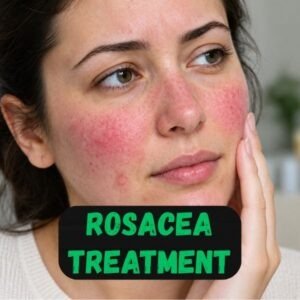
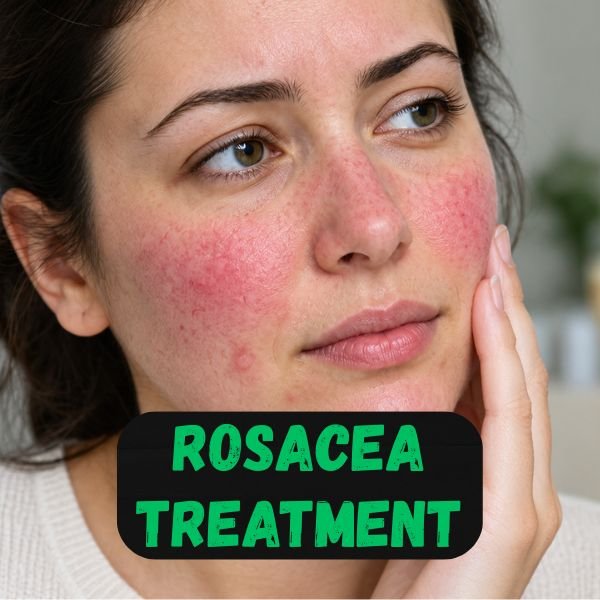
If your face often looks red, feels hot or irritated, or develops small bumps that look a bit like acne, you may be dealing with rosacea. Rosacea is a common, long-term skin condition that usually affects the face, especially the cheeks, nose, chin, and forehead.
Unlike a temporary flush, redness caused by rosacea can stick around or come back frequently. Some people mainly notice flushing and visible blood vessels, while others develop pimples, burning, stinging, or dry, sensitive skin. Rosacea can also affect the eyes and, less commonly, areas such as the neck and upper chest.
What Does Rosacea Look Like?
Rosacea doesn’t look exactly the same on everyone. In lighter skin tones, it may appear pink, red, or flushed. On darker skin tones, the color changes can be harder to see, and rosacea may appear as brownish, violet, or darker areas of discoloration.
One of the most common signs is persistent facial redness. You might notice that your cheeks or nose stay red after the original trigger-such as heat, exercise, or a hot drink-has passed. Over time, small visible blood vessels may also appear.
Some people experience a different pattern, with small red bumps and pus-filled spots that resemble acne. This is often called papulopustular rosacea.
Rosacea Pimples
Rosacea pimples can look very similar to ordinary acne. Both conditions can cause red bumps and pustules, but there are some clues that can help tell them apart.
Rosacea tends to cause redness and sensitivity along with the bumps. Your skin may burn or sting, and products that never bothered you before may suddenly feel irritating. Traditional acne, on the other hand, is more likely to include blackheads and whiteheads.
It’s also possible to have both acne and rosacea at the same time. That’s one reason it’s better not to assume that every facial bump is acne and start using strong acne products on your own. Ingredients designed for acne can sometimes irritate already-sensitive rosacea-prone skin.
Rosacea on the Nose
The nose is one of the most common places for rosacea to appear. You may notice redness, flushing, visible blood vessels, or a persistent change in skin color around the nose.
In some people, long-term rosacea can cause the skin around the nose to become thicker. This is known as rhinophyma.1 It is a form of phymatous rosacea and is much less common than facial redness or acne-like bumps.
Having a red nose doesn’t automatically mean you have rosacea, though. Sun exposure, irritation, skin conditions, and other factors can cause similar changes. A dermatologist can help determine what’s actually causing the redness.
Can Rosacea Affect the Eyes?
Yes. Rosacea isn’t always limited to the skin. It can also affect the eyes, a condition known as ocular rosacea.
You might notice that your eyes look red or watery, feel dry or gritty, or burn and sting. The eyelids can become irritated or swollen, and some people develop crusting around the eyelashes.
What’s particularly important about rosacea eyes is that eye symptoms don’t always appear at the same time as facial symptoms. In some people, eye problems can be one of the first signs of rosacea.
Mild eye irritation may seem like something you can simply ignore, but persistent symptoms deserve attention. If you develop eye pain, blurred vision, strong sensitivity to light, or significant redness, it’s important to seek medical advice promptly. Ocular rosacea can sometimes affect the cornea, the clear surface at the front of the eye.
Can You Get Rosacea on Your Chest?
Rosacea mainly affects the face, so rosacea on the chest is less typical. However, rosacea-like redness or symptoms can sometimes appear outside the central face, including the neck, upper chest, scalp, or back.
Several other skin conditions can cause similar-looking patches, including irritation, eczema, sun-related changes, and allergic reactions.
This is especially important if the area is itchy, scaly, painful, spreading quickly, or looks very different from the symptoms you normally experience on your face.
What Causes Rosacea? Understanding Demodex Mites
There’s no single cause of rosacea. Researchers believe several factors may play a role, including the way the immune system responds, blood-vessel changes, genetics, the skin’s protective barrier, and environmental triggers.
One topic that gets a lot of attention is Demodex mites.
What Are Rosacea Mites?
Demodex mites are microscopic organisms that normally live on human skin. Most people have them, and simply having Demodex doesn’t mean that you have a skin problem.
Two species commonly discussed in relation to humans are Demodex folliculorum and Demodex brevis. They live around structures such as hair follicles and oil-producing glands.
So why are they discussed in connection with rosacea?
Research has found that people with rosacea can have a higher density of Demodex mites on their skin than people without rosacea.2 This has led scientists to investigate whether Demodex may contribute to inflammation in some people with rosacea.
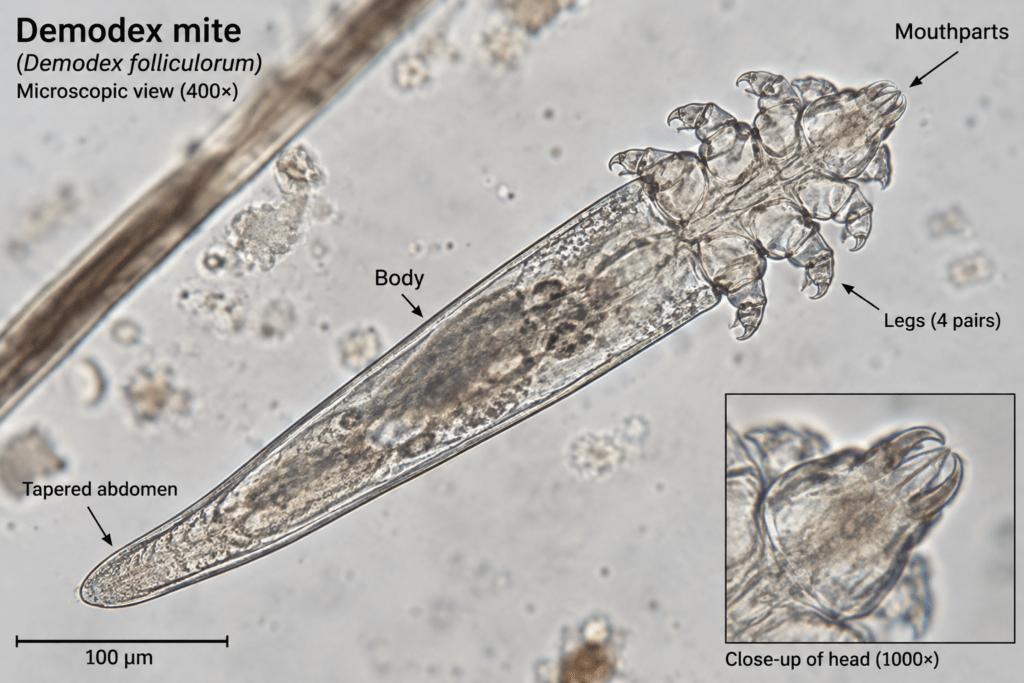
Demodex Mites and Rosacea
The important thing to understand is that the relationship between Demodex mites and rosacea is more complicated than saying, “Mites cause rosacea.”
Demodex may be one factor involved in the condition, particularly in some forms of inflammatory rosacea, but rosacea appears to involve several different biological and environmental factors.
In other words, finding Demodex mites on your skin doesn’t prove that they are the reason you have rosacea. These microscopic mites are a normal part of the skin environment for many people.
This distinction matters because online discussions sometimes make Demodex sound like a simple infection that explains every case of rosacea. The science doesn’t support such a straightforward explanation.
Common Rosacea Triggers
Although triggers don’t necessarily cause rosacea in the first place, they can make symptoms suddenly more noticeable.
For one person, a hot shower might cause a major flare. For someone else, sunlight, stress, spicy food, exercise, or alcohol might be the bigger problem.
Common rosacea triggers include heat, sunlight, hot drinks, spicy foods, stress, exercise, cold or windy weather, and certain skincare products. Alcohol is another well-known trigger for some people.
The tricky part is that your triggers may not be the same as someone else’s. That’s why paying attention to your own pattern can be more useful than following a long list of foods and activities to avoid.
Keeping a simple trigger diary can help. If you notice that your face consistently becomes flushed after a particular drink, meal, workout, or skincare product, you may have found one of your personal triggers.
Rosacea and Alcohol: Is There a Connection?
Yes, rosacea and alcohol can be connected, but alcohol doesn’t cause rosacea in everyone.
Alcohol can cause blood vessels to widen, which can lead to facial flushing. If you’re already prone to rosacea-related flushing, this may make your symptoms more noticeable or trigger a flare.
Red wine is often mentioned as a particularly common trigger, but beer, spirits, and other alcoholic drinks can also cause problems for some people. There isn’t one type of alcohol that triggers rosacea in every person.
If you notice a clear pattern between drinking alcohol and your symptoms, reducing or avoiding that particular trigger may help you manage your flare-ups. A trigger diary can make these patterns easier to spot.
The goal isn’t to create a huge list of foods and activities you’re afraid to enjoy. Instead, focus on the things that actually trigger your own symptoms.
The Bottom Line on Rosacea
Rosacea can show up in several different ways, from persistent facial redness and rosacea pimples to nose changes and irritated eyes. It can also be influenced by factors such as heat, sunlight, stress, skincare products, and alcohol.
Demodex mites may be involved in some cases, but they’re only one part of a much bigger picture. Understanding your symptoms and personal triggers gives you a better starting point for managing the condition.
Rosacea During Pregnancy
Pregnancy can bring plenty of changes to your skin, and pregnancy rosacea can be challenging because some medications and cosmetic procedures may not be appropriate during pregnancy.
Hormonal and vascular changes during pregnancy may affect flushing and skin sensitivity. If you already have rosacea, you may notice that your symptoms change during pregnancy. However, everyone’s experience is different.
The biggest thing to remember is not to start a new rosacea medication simply because you see it recommended online. Some ingredients and treatments aren’t suitable during pregnancy.
If you’re experiencing rosacea during pregnancy, talk with your dermatologist and prenatal healthcare provider before using prescription treatments, over-the-counter products, or undergoing procedures. They can help you choose options that make sense for your particular situation.
It’s also a good time to keep your skincare routine simple. A gentle cleanser, moisturizer, and appropriate sunscreen can help protect sensitive skin without adding unnecessary irritation.
Rosacea Treatment: What Can Help?
There isn’t one treatment that works for everyone with rosacea. That’s because rosacea can look very different from person to person. One person may mainly struggle with facial redness and flushing, while another may have acne-like bumps, visible blood vessels, or eye symptoms.
The right rosacea treatment depends on which symptoms you have and how severe they are. A dermatologist can help identify the type of rosacea you’re dealing with and recommend a treatment plan.
Treatment can include prescription creams or gels, oral medication, lifestyle changes, and procedures such as laser or light-based therapy. Good skincare is also an important part of keeping symptoms under control.
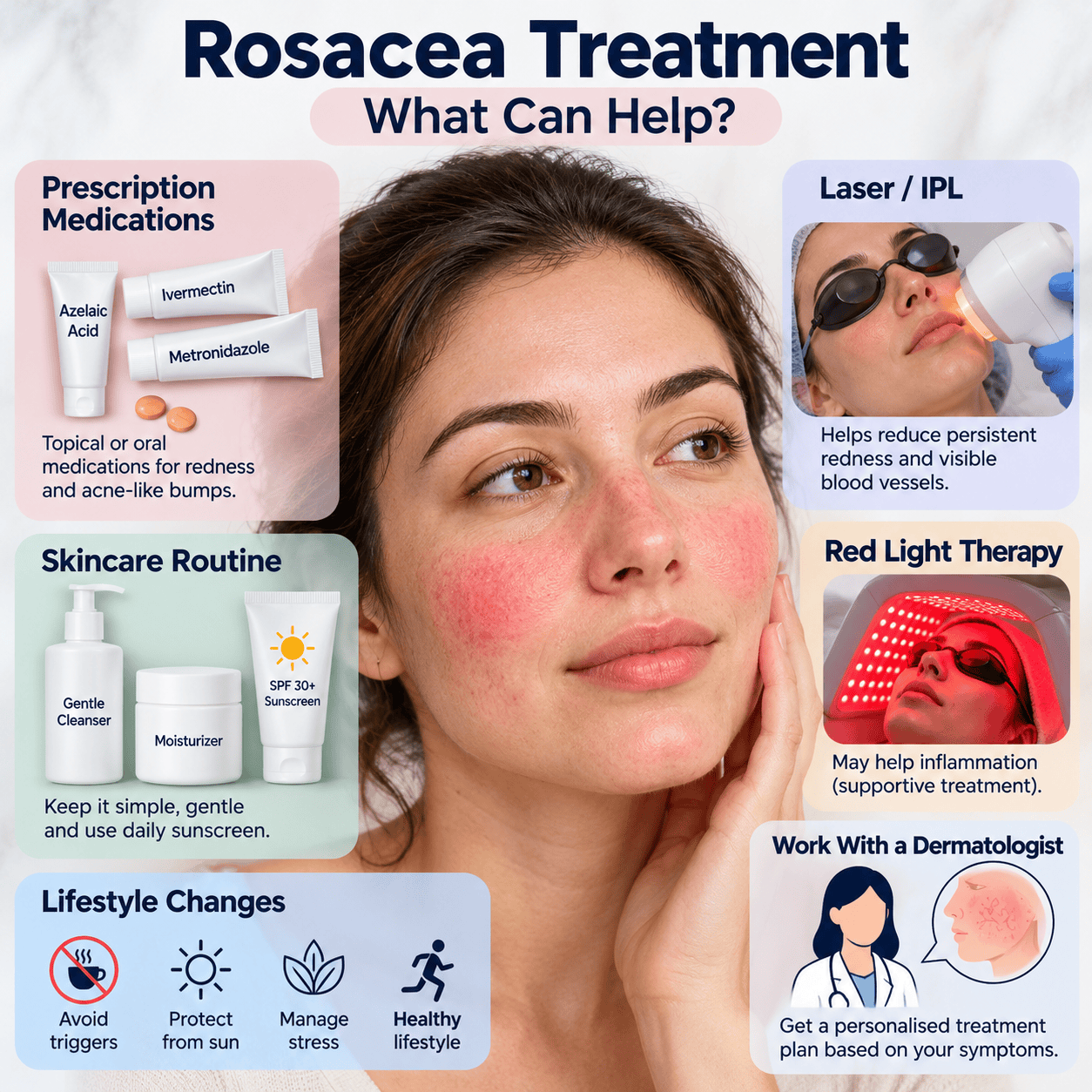
Treatment for Rosacea on the Face
For most people, treatment for rosacea on the face starts with identifying the symptoms that cause the most trouble.
If you mainly have acne-like bumps and pustules, your dermatologist may recommend a topical medication such as azelaic acid, ivermectin, or metronidazole. In some cases, an oral medication such as low-dose doxycycline may be prescribed.
If persistent redness or flushing is the main issue, different treatments may be more appropriate. Prescription medications such as brimonidine or oxymetazoline can temporarily reduce facial redness in some people.
Visible blood vessels may respond better to laser or light-based treatments.
Don’t Forget About Skincare
Medication isn’t the whole story. A simple skincare routine can make a surprisingly big difference when you have rosacea-prone skin.
Look for products that are gentle and don’t leave your skin feeling tight or burning. Avoid scrubbing your face aggressively, and be careful with products that contain ingredients known to irritate your skin.
Daily sunscreen is especially important because sunlight can trigger or worsen rosacea. A broad-spectrum sunscreen with SPF 30 or higher is generally a good starting point.
The goal isn’t to have a complicated 10-step routine. In fact, keeping things simple can be better for sensitive skin.
A basic routine might look like this:
Morning: gentle cleanser → moisturizer → sunscreen
Evening: gentle cleanser → prescribed treatment → moisturizer
Your dermatologist may recommend a different routine depending on your symptoms and the products you’re using.
Azelaic Acid for Redness
Azelaic acid for redness is a popular topic among people looking for a rosacea-friendly skincare ingredient.
Azelaic acid is a naturally occurring acid that has anti-inflammatory properties and is used in several skin conditions. It’s particularly useful for the acne-like bumps and pustules associated with rosacea.
It may also help improve some of the persistent color left behind by inflammation.
One advantage of azelaic acid is that it can address more than one issue at once. However, that doesn’t mean it’s automatically the best option for everyone.
Sensitive skin can sometimes react to azelaic acid with burning, itching, dryness, or irritation, especially when you first start using it. Starting too frequently or applying too much can make irritation worse.
If your skin is highly sensitive, it’s worth asking a dermatologist how often you should use it and which formulation is appropriate for you.
Also keep in mind that azelaic acid for rosacea isn’t necessarily a quick fix. Consistent use over time is usually more realistic than expecting redness to disappear overnight.
IPL Treatment for Rosacea
If your biggest concern is persistent redness or visible blood vessels, you may have heard about IPL treatment for rosacea.
IPL stands for intense pulsed light. Unlike a standard laser, which uses a specific wavelength of light, IPL uses a broader range of light wavelengths.
The light energy can target blood vessels and other structures associated with visible redness. As the treated vessels absorb the energy, their appearance can become less noticeable.
Does IPL Work for Rosacea?
IPL for rosacea can improve facial redness, flushing, and visible blood vessels in some people. However, results vary, and treatment usually requires more than one session.
IPL isn’t a permanent cure for rosacea. Even when treatment produces a significant improvement, symptoms can return because the underlying tendency toward rosacea remains.
There are also potential side effects. Temporary redness, swelling, irritation, and discomfort can occur, while improper treatment can cause burns or changes in skin pigmentation.
For that reason, IPL shouldn’t be treated like an ordinary beauty treatment. It’s best to have your skin assessed first and have the procedure performed by an appropriately qualified professional who understands rosacea and your skin type.
Red Light Therapy for Rosacea
Red light therapy for rosacea is another treatment you’ll see discussed online, particularly in skincare and wellness circles.
Red light therapy, sometimes called LED or low-level light therapy, uses specific wavelengths of light rather than the intense pulses used in IPL.
That’s an important distinction: red light therapy and IPL are not the same treatment.
Red light therapy is being studied for its potential effects on inflammation, healing, and skin health. Some people with sensitive or inflammatory skin are interested in it because it is generally non-invasive.
However, the evidence for red light therapy for rosacea isn’t as established as the evidence for many conventional rosacea treatments. Results can also depend on the device, wavelength, treatment schedule, and the particular symptoms being treated.
If you’re considering an LED device at home, don’t assume that any red-light product will treat rosacea effectively. Device specifications can vary significantly.
It’s sensible to discuss light therapy with a dermatologist, especially if you’re considering it as an alternative to proven medical treatment.
How to Manage Rosacea Long Term
Because rosacea is a chronic condition, managing it is usually more about controlling symptoms than finding a one-time cure.
Think of it as learning what keeps your skin calm.
Start by figuring out your personal triggers. If sunlight, heat, alcohol, spicy food, stress, or a particular skincare product consistently causes a flare, reducing exposure to that trigger may help.
At the same time, don’t feel as though you need to eliminate everything that has ever been associated with rosacea. Triggers are highly individual.
A gentle skincare routine and daily sunscreen can help protect your skin barrier. If you’ve been prescribed medication, use it consistently and give it enough time to work unless your healthcare provider tells you otherwise.
And if your symptoms suddenly change, become significantly worse, or begin affecting your eyes, it’s worth getting them checked rather than simply adding another product to your skincare routine.
Frequently Asked Questions
Q. Are rosacea pimples the same as acne?
A. Not exactly. Rosacea pimples can look like acne because both can cause red bumps and pustules. However, rosacea is often accompanied by persistent redness, flushing, burning, or stinging. Blackheads and whiteheads are more typical of acne.
It’s also possible to have both conditions, so a dermatologist can help determine what’s actually causing your breakouts.
Q. Why does rosacea often affect the nose?
A. The nose is a common area for rosacea because the condition frequently affects the central face. Persistent redness and visible blood vessels may develop there.
In more advanced cases, some people develop thickened skin around the nose, known as rhinophyma. This isn’t something that happens to everyone with rosacea.
Q. Can rosacea affect your eyes?
A. Yes. Ocular rosacea can cause dry, watery, burning, gritty, or irritated eyes and swollen eyelids.
Don’t ignore significant eye symptoms. Eye pain, blurred vision, or strong sensitivity to light should be assessed promptly by a healthcare professional.
Q. Can rosacea spread to the chest?
A. Rosacea mainly affects the face, but rosacea-like symptoms can sometimes occur on areas such as the neck and upper chest.
Because several other skin conditions can cause chest redness, it’s important to get an unusual or persistent rash properly diagnosed rather than assuming it’s rosacea.
Q. Do Demodex mites cause rosacea?
A. The relationship between Demodex mites and rosacea is still being studied. People with rosacea may have higher levels of Demodex mites on their skin, but this doesn’t mean that Demodex is the sole cause of rosacea.
Rosacea appears to involve multiple factors, so treating the condition isn’t simply a matter of “getting rid of mites.”
Q. Can pregnancy make rosacea worse?
A. It can. Hormonal and vascular changes during pregnancy may affect existing rosacea symptoms, although the experience varies from person to person.
If you’re pregnant and experiencing a flare, talk to your healthcare provider before starting a medication or treatment. Some rosacea treatments may not be appropriate during pregnancy.
Q. Does alcohol make rosacea worse?
A. Alcohol can trigger flushing and make rosacea symptoms more noticeable in some people. Red wine is a commonly reported trigger, but other alcoholic drinks can cause problems too.
If you notice that alcohol consistently triggers your symptoms, limiting or avoiding it may help.
Q. What is the best treatment for rosacea on the face?
A. There isn’t one “best” treatment for everyone. The right option depends on whether your main problem is redness, flushing, acne-like bumps, visible blood vessels, or another symptom.
Treatments can include topical medications, oral medications, trigger avoidance, skincare, and procedures such as IPL or laser therapy.
Q. Does azelaic acid help rosacea redness?
A. Azelaic acid can help with the inflammatory bumps and pustules associated with rosacea and may also improve persistent color. However, it can irritate some people with sensitive skin.
Use it according to your healthcare provider’s instructions and don’t assume that using more will make it work faster.
Q. Does IPL treatment work for rosacea?
A. IPL treatment for rosacea can improve persistent redness, flushing, and visible blood vessels for some people. Several sessions may be needed, and results vary.
Because IPL can cause burns or pigmentation changes if used incorrectly, professional assessment and treatment are important.
Q. Is red light therapy good for rosacea?
A. Red light therapy for rosacea is an area of interest, but it shouldn’t automatically be considered a replacement for established rosacea treatments.
If you’re interested in LED or red-light therapy, talk with a dermatologist about whether it makes sense for your particular symptoms and skin type.