A boil can start out as a small red bump, but it can quickly become much more painful and swollen. Unlike an ordinary pimple, a boil is usually caused by a bacterial infection involving a hair follicle. As the infection develops, pus can build up underneath the skin, creating a tender lump that may eventually drain.
The bacteria behind many boils are Staphylococcus aureus, often simply called staph.1 These bacteria can live harmlessly on the skin, but they can cause an infection if they get into a hair follicle or a break in the skin.
What Is a Boil?
A boil, also known as a furuncle, is a painful infection that develops around a hair follicle. It usually starts when bacteria get into a follicle or damaged area of skin. Your immune system responds to the infection, causing inflammation, redness, swelling, and tenderness.
As the body fights the infection, pus can collect inside the area. Pus is made up of things such as bacteria, immune cells, and damaged tissue. As more pus builds up, the boil may become larger and more painful.
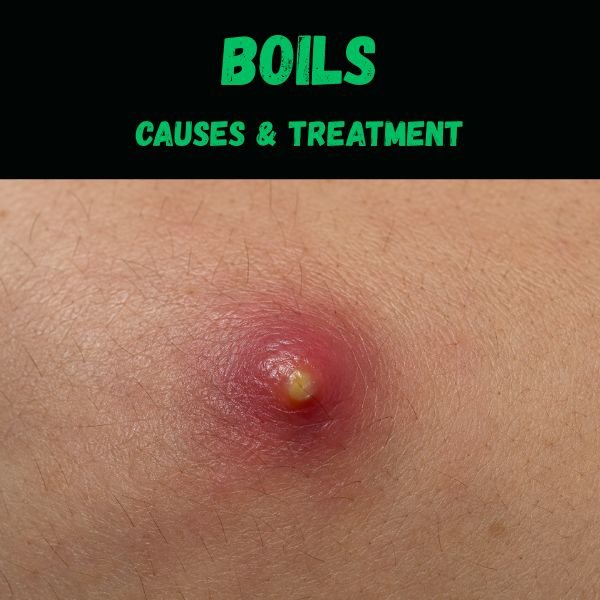
A boil can begin as a small, firm bump that looks similar to a pimple. Over time, though, it may become noticeably larger, warmer, and more painful. Eventually, it may develop a white or yellow center as pus moves closer to the surface.
Not every red lump is a boil, though. Pimples, cysts, insect bites, ingrown hairs, and other skin conditions can sometimes look similar. The location, appearance, pain level, and how the bump changes over time can provide clues, but a healthcare professional may be needed to tell them apart.
What Does a Boil Look Like?
Boils can look slightly different depending on how far the infection has developed. In the beginning, you might notice a small red or pink bump that feels tender when you touch it.
Over the next few days, the bump may become more noticeable. The surrounding skin can become red, swollen, and warm. The lump may also feel firm underneath the skin.
As pus collects inside, the boil can become increasingly painful. Some boils eventually develop a visible white or yellow center. This is sometimes called the “head” of the boil. However, a boil doesn’t necessarily develop a clear head right away.
You may also notice that the area feels tight or throbs as the swelling increases. Larger boils can be particularly uncomfortable because pressure builds inside the infected area.
Where Do Boils Usually Appear?
Boils can develop almost anywhere there are hair follicles, but they’re particularly common in areas where there is friction, sweat, or repeated skin irritation.
Common locations include the face, neck, armpits, thighs, and buttocks. They can also occur around the groin or other areas where skin rubs against skin or clothing.
For example, shaving can cause tiny breaks in the skin that make it easier for bacteria to enter a hair follicle. Constant rubbing from tight clothing can also irritate follicles and contribute to skin problems.
The location doesn’t automatically tell you whether a bump is a boil. What matters is the combination of symptoms and how the bump develops.
What Causes Boils?
The most common cause of boils is a bacterial infection of a hair follicle. One of the main bacteria involved is Staphylococcus aureus.
Staph bacteria are actually common. Many people carry them on their skin or inside their nose without becoming sick. Problems can occur when the bacteria enter the skin through a small cut, scratch, irritated follicle, or other opening.
Once bacteria get inside, your immune system sends cells to fight the infection. This creates inflammation, which is responsible for much of the redness, swelling, heat, and pain associated with a boil.
The infection can also cause pus to form. That’s why a boil can gradually change from a small red bump into a larger, softer, pus-filled lump.
How Can Bacteria Get Into the Skin?
You don’t need to have a major wound for bacteria to enter. A tiny break in the skin may be enough.
Shaving, scratching, picking at the skin, or rubbing an area repeatedly can damage the skin’s protective barrier. Even an irritated hair follicle can provide an opportunity for bacteria to get inside.
This is one reason you shouldn’t automatically assume that getting a boil means you have poor hygiene. Boils aren’t simply caused by being “dirty.” Staph bacteria can already be present on healthy skin. The important factor is whether the bacteria get into tissue where they can cause an infection.
Who Is More Likely to Get Boils?
Anyone can develop a boil, but certain situations can increase the chances.
- Close contact with someone who has a staph infection: Frequent skin-to-skin contact can increase exposure to Staphylococcus aureus bacteria.
- Sharing personal items: Towels, razors, washcloths, and other personal items can provide opportunities for bacteria to spread.
- Frequent skin irritation or damage: Cuts, shaving irritation, scratching, or conditions that weaken the skin barrier can make it easier for bacteria to enter hair follicles.
- Certain health conditions: A weakened immune system or other conditions that make infections harder to fight can increase the risk of developing boils.
However, one boil doesn’t necessarily indicate a health problem: Even an otherwise healthy person can develop a boil when bacteria enter an irritated or damaged hair follicle.
Can You Catch a Boil From Someone Else?
This question can be confusing. You don’t necessarily “catch” a boil in the same way you catch a cold. However, the bacteria that cause many boils can spread from person to person.2
Close skin-to-skin contact can allow staph bacteria to move between people. The bacteria can also spread through shared towels, washcloths, clothing, bedding, and razors.
This is particularly important if someone has a boil that is actively draining. The fluid from the boil can contain bacteria, so touching the drainage and then touching another person’s skin can potentially spread the infection.
Good hygiene can help reduce this risk. Wash your hands regularly, avoid sharing personal items, and keep a draining boil clean and covered with an appropriate dressing.
You also don’t need to isolate yourself from everyone just because you have a boil. The goal is simply to avoid spreading the bacteria and to keep the infected area protected.
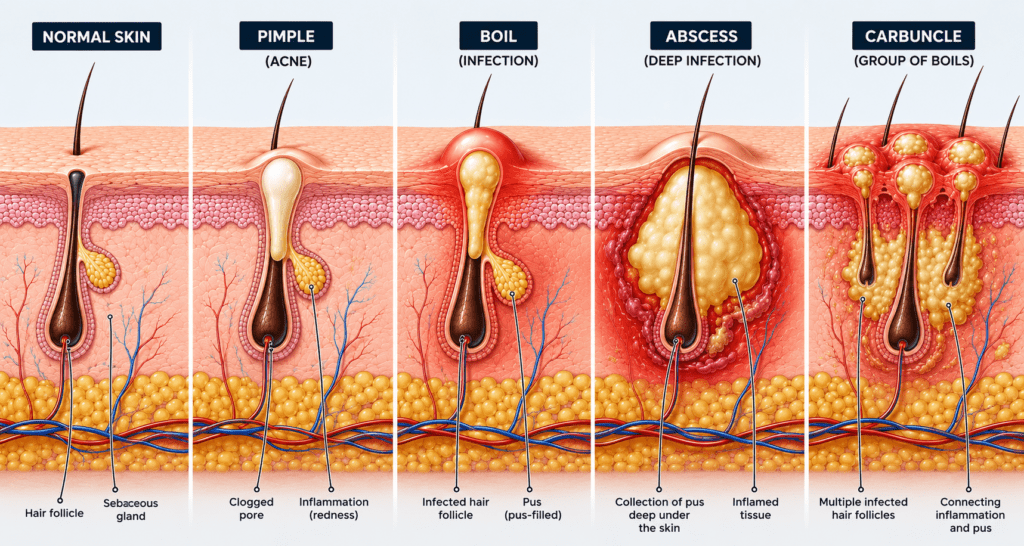
Boil vs. Pimple vs. Abscess vs. Carbuncle
A pimple is usually related to acne and develops because a pore becomes clogged with oil and dead skin cells. It may have a blackhead, whitehead, or inflamed red appearance.
A boil can look like a large pimple, which is why the two are sometimes confused. But they aren’t exactly the same thing. It is generally an infection involving a hair follicle and is often more painful and swollen than an ordinary pimple and may eventually fill with pus.
An abscess is a collection of pus beneath the skin or inside the body. A boil can be considered a type of localized skin infection, while an abscess may occur deeper or in different tissues.
A carbuncle is a group of connected boils. Because several infected follicles are involved, a carbuncle can be larger and more serious than a single boil.
Understanding these differences is useful, but don’t worry if you can’t identify the exact type of bump by looking at it. Skin infections can overlap in appearance, and a doctor can make a proper diagnosis when necessary.
The key takeaway is simple: a boil is usually a painful bacterial infection around a hair follicle. It often starts as a red, tender bump, becomes swollen and filled with pus, and may eventually drain. Knowing what you’re dealing with is important because squeezing or cutting a suspected boil yourself can spread the infection and make the situation worse.
How to Treat, Prevent, and Get Help for Boils
If you have a boil, your first instinct might be to squeeze it and get the pus out. That can be tempting, especially when the area is painful and feels like it’s under pressure. But squeezing, piercing, or cutting a boil yourself can spread the infection and damage the surrounding skin. In many cases, the safest approach is to encourage the boil to drain naturally while keeping the area clean.
How to Treat a Boil at Home
For a small, uncomplicated boil, home care is often enough.
- Use a warm compress: For a small, uncomplicated boil, soak a clean washcloth in warm water, wring it out, and gently hold it against the boil for 10–15 minutes. You can repeat this several times a day.
- Let warmth encourage natural drainage: A warm compress can improve circulation around the area, encourage the boil to open and drain naturally, and help reduce discomfort.
- Keep the area clean: Avoid unnecessary touching. Wash your hands before and after caring for the boil. If it opens and starts draining, gently clean the area and cover it with clean dressing or gauze.
- Avoid sharing personal items: Don’t share towels, washcloths, razors, clothing, or bedding while you have a draining boil, as this can help reduce the spread of bacteria.
- Manage pain if needed: An over-the-counter pain reliever may help with discomfort. Follow the product instructions, and ask a pharmacist or healthcare professional if you’re unsure whether a particular medicine is suitable for you.
- Don’t squeeze or drain the boil yourself: What looks like a simple lump may contain an infection deeper under the skin, and forcing it open can potentially spread the infection or damage surrounding tissue.
Warm vs. Cold Compress for Boils: Which Is Better?
For a small boil that is being managed at home, a warm, moist compress can be useful because it increases local blood flow and may help the boil soften and drain naturally.
However, once a doctor has evaluated the lesion, the approach may be different depending on what is actually present. Antibiotics treat the bacterial component of an infection, but they do not necessarily eliminate a pocket of pus that has already formed. If there is a significant collection of pus, drainage may still be needed.
On the other hand, if there is little or no drainable pus and the main problem is pain, tenderness, or swelling, a cool compress can provide symptomatic relief without actively encouraging the lesion to come to a head. The choice between warmth and cooling therefore depends more on the stage and characteristics of the boil than simply on whether antibiotics are being taken.
Can You Pop a Boil?
No. You shouldn’t pop, pierce, squeeze, or cut a boil yourself.
It might seem like popping the boil would make it heal faster, but forcing it open can actually cause problems. Pressure can push infected material into surrounding tissue instead of getting rid of it.
There is also a risk of spreading the bacteria to nearby skin or to other parts of your body. If the boil is draining, touching the fluid and then touching another area can potentially spread the infection.
A boil may eventually open on its own as it fills with pus and the pressure increases. When that happens, the important thing is to keep the area clean and covered rather than continuing to squeeze it.
If a boil is large, deep, very painful, or refuses to drain, a healthcare professional may need to drain it. This can be done safely using the appropriate medical procedure.
How Long Does a Boil Take to Heal?
So, how long do boils last? There’s no single answer because boils vary in size and depth.
A small boil may improve relatively quickly, while a larger or deeper infection can take longer. Many boils heal on their own within about one to three weeks.
The boil may become more painful before it starts draining. After it opens, the swelling and pain should gradually improve, although the area may remain tender for a while.
Don’t focus only on the number of days, though. Pay attention to whether the boil is getting better or worse. A small boil that is gradually shrinking is generally less concerning than one that keeps growing, becomes increasingly painful, or develops spreading redness.
If the infection isn’t improving or keeps coming back, it’s a good idea to have it evaluated rather than continuing to treat it at home indefinitely.
When Should You See a Doctor About a Boil?
Many small boils can be managed at home, but some need medical attention.
You should consider contacting a healthcare professional if:
- Very painful, unusually large, or worsening boil: Consider contacting a healthcare professional if the boil is becoming increasingly painful, swollen, or larger.
- Fever or spreading redness: Seek medical advice if you develop a fever or notice redness and swelling spreading beyond the area around the boil.
- Red streaks extending away from the affected area may indicate that the infection is spreading, and you should not ignore them.
- Boil on the face: Boils on the face, particularly around the nose or eyes, may require more careful evaluation because infections in these areas can potentially cause serious complications
- Several boils at once: Multiple boils developing at the same time are a reason to seek medical advice.
- Recurring boils: If boils keep returning, pursue a medical evaluation to determine any underlying cause.
- Boil not healing: A boil that isn’t improving or appears to be getting worse should be assessed by a healthcare professional.
- Weakened immune system or certain health conditions: People with conditions that make infections harder to fight may need to seek medical attention sooner.
How Are Boils Treated by a Doctor?
If you visit a doctor for a boil, they will usually examine the affected area and consider how large, deep, and severe the infection appears to be.
Health professionals may drain a large boil or skin abscess. This allows the trapped pus to leave the infected area without you having to squeeze or cut the skin yourself.
Sometimes a sample of the drainage may be taken for testing. This can help identify the bacteria responsible for the infection and determine whether a particular treatment is needed.
Antibiotics aren’t automatically necessary for every boil. A doctor may recommend them depending on factors such as the severity of the infection, whether it has spread, whether you have multiple infections, and your overall health.
If you have a recurring problem with boils, your doctor may also look for an underlying reason why they keep happening.
The important point is that treatment depends on the individual situation. A small boil that is healing normally is very different from a large, deep infection accompanied by fever.
Why Do I Keep Getting Boils?
Getting one boil can happen to anyone. But if you keep getting boils, it’s worth finding out why.
- Repeated exposure to Staphylococcus aureus: These bacteria can live harmlessly on the skin or inside the nose, but they can sometimes cause repeated infections and boils.
- Spread within the household: If one person has recurring boils, bacteria can potentially spread to other family members through close contact or shared personal items.
- Repeated skin irritation or injury: Shaving, friction, scratching, or other skin damage can create openings that allow bacteria to enter hair follicles.
- Certain health conditions: Some medical conditions can make a person more susceptible to recurrent skin infections and boils.
- Hidradenitis suppurativa (HS): This condition can cause painful, recurring lumps that may be mistaken for boils.3 They commonly occur in the armpits, groin, buttocks, or under the breasts. If painful “boils” repeatedly appear in similar locations-especially if they leave scars or tunnels under the skin-they may not be ordinary boils. A dermatologist can help determine whether another condition, such as hidradenitis suppurativa, is responsible.
If you’re repeatedly getting painful “boils” in the same general areas, especially if they leave scars or tunnels under the skin, don’t assume you’re simply prone to boils. A dermatologist can determine whether something else is going on.
How Can You Prevent Boils?
You can’t guarantee that you’ll never get another boil, but there are several simple things you can do to reduce your risk.
Start with good hand hygiene. Wash your hands regularly, especially after touching a boil or changing its dressing.
Take care of cuts and scratches promptly. Clean them and keep them covered while they heal. A damaged area of skin provides an easier entry point for bacteria.
Avoid sharing personal items such as towels, razors, and washcloths. If you have a draining boil, wash clothing, towels, and bedding regularly.
It’s also a good idea to avoid picking or scratching your skin unnecessarily. The fewer breaks you create in the skin, the fewer opportunities bacteria have to get inside.
If someone in your household has recurring boils, talk to a healthcare professional about ways to reduce the spread of bacteria.
Remember, though, that boils aren’t simply a hygiene problem. Even people with good hygiene can develop them. Prevention is about reducing bacterial spread and protecting the skin, not about constantly scrubbing yourself.
Frequently Asked Questions About Boils
What causes boils?
Boils are usually caused by a bacterial infection involving a hair follicle. The bacterium Staphylococcus aureus is one of the most common causes. Bacteria can enter through small cuts, scratches, irritated skin, or damaged hair follicles.
Are boils contagious?
The boil itself isn’t “contagious” in the same way as a cold, but the bacteria causing the infection can spread. Close skin-to-skin contact and sharing towels, razors, washcloths, clothing, or bedding can increase the chance of transmission.
Can I pop a boil?
No. Don’t pop, squeeze, pierce, or cut a boil yourself. Doing so can spread the infection and increase the risk of scarring. If a large boil needs to be drained, a healthcare professional can do it safely.
What is the fastest way to get rid of a boil?
For a small boil, a warm compress several times a day can encourage natural drainage. Don’t try to force it open. Larger or deeper boils may need professional drainage.
How long does a boil last?
Many boils heal within about one to three weeks, although the exact time depends on the size and depth of the infection. A boil that continues to grow or doesn’t improve should be evaluated.
Can a boil go away on its own?
Yes. Some small boils can resolve without medical treatment. However, worsening pain, spreading redness, fever, multiple boils, or a persistent infection are reasons to seek medical advice.
Why do I keep getting boils?
Recurring boils may be related to repeated exposure to staph bacteria, household transmission, skin irritation, or certain health conditions. Repeated boil-like lumps can also sometimes be hidradenitis suppurativa, which requires different management.
When is a boil dangerous?
A boil needs prompt medical attention if you develop fever, spreading redness, red streaks, severe swelling, or significant worsening pain. Boils on certain areas, such as the face, may also need professional evaluation.