If you ever noticed a small, hard spot on the bottom of your foot that seems to hurt every time you walk? You might assume it’s just a bit of thick skin. But sometimes, that stubborn spot is actually a plantar wart.
A plantar wart is a small skin growth that develops on the sole of the foot. It is caused by certain types of human papillomavirus (HPV). Unlike some warts that stick out from the skin, plantar warts often grow inward because of the pressure created by standing and walking.
They are usually harmless, but they can be annoying-and sometimes surprisingly painful. But many plantar warts eventually disappear on their own. Others may need treatment, especially if they become painful or refuse to go away.
What Does a Plantar Wart Look Like?
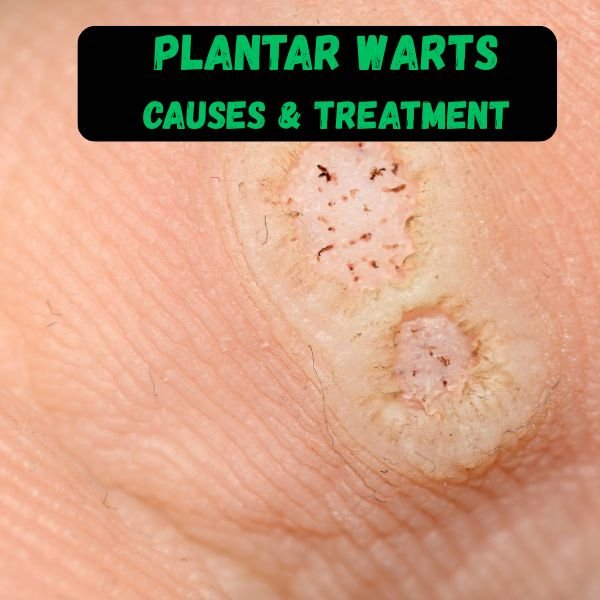
A plantar wart can be easy to miss at first. It may look like a small, rough patch of skin on the bottom of your foot. Because your feet are constantly under pressure, the wart can become covered with a layer of hard skin, making it look similar to a callus.
One clue is the texture. A plantar wart often feels rough or grainy rather than smooth. You may also notice tiny black or dark dots inside it.
These dots are sometimes called “wart seeds” but that’s a misleading name. They aren’t seeds at all. They are tiny blood vessels that can become visible within the wart.
The wart may be round or irregular in shape. You might have just one, or several can appear close together. When several smaller plantar warts grow in a cluster, they’re called mosaic warts.
Another useful clue is what happens to the natural lines on your skin. The tiny lines that normally run across the sole of your foot may appear to stop when they reach a plantar wart.
Can a Plantar Wart Hurt?
Yes. A painful plantar wart is fairly common.
Think about what your feet go through every day. Every step puts pressure on the sole, and that pressure can push the wart deeper into the skin. This is one reason plantar warts can hurt more than warts found on other parts of the body.
The pain may feel like you’re stepping on a tiny stone or having something stuck inside your shoe. Some people only notice discomfort when walking for a long time, while others may feel pain with almost every step.
The location matters, too. A wart on the heel or ball of the foot is likely to experience more pressure than one in a less weight-bearing area.
Where Do Plantar Warts Appear?
As the name suggests, plantar warts appear on the plantar surface-the bottom or sole-of the foot.
They commonly develop on areas that take a lot of pressure when you walk, including the:
- Heel
- Ball of the foot
- Sole
- Areas beneath the toes
A plantar wart can also appear in a spot where you might not expect it. You don’t necessarily need to see a large, raised growth. Sometimes it looks more like a flat, hardened patch of skin.
Some people develop a single wart. Others develop several at once. When multiple warts grow close together, they can form mosaic warts. These may cover a larger area of the sole and can be more difficult to treat.
What Causes a Plantar Wart?
The main cause of a plantar wart is infection with certain types of human papillomavirus, commonly known as HPV.
HPV is a large family of viruses. Different types can affect different parts of the body. The HPV types associated with plantar warts are different from the types most commonly associated with genital infections.
The virus usually gets into the skin through a tiny break or weak spot. You may not even remember injuring your foot. Small cuts, cracks, or areas of damaged skin can be enough for the virus to enter.
Once inside the skin, HPV can cause the cells in that area to grow differently, creating the thickened skin that eventually becomes a wart.
This doesn’t mean that everyone exposed to HPV will develop a plantar wart. Your immune system also plays a role in how your body responds to the virus.
Are Plantar Warts Contagious?
Yes, plantar warts are contagious.
The virus can spread through direct contact with an infected wart or through surfaces that have come into contact with the virus. This is one reason plantar warts can sometimes spread in places where people walk barefoot, such as locker rooms, communal showers, and swimming-pool areas.
However, simply walking barefoot in a public place doesn’t mean you’re guaranteed to get a wart. The virus generally needs an opportunity to enter the skin, such as through a tiny cut or crack.
You can also accidentally spread a wart from one part of your own body to another. Picking or scratching a wart can make this more likely.
That’s why it’s a good idea to avoid picking at a plantar wart, even when you’re tempted to get rid of it yourself.
Plantar Wart vs. Corn: What’s the Difference?
This is where things can get confusing.
A plantar wart and a corn can look remarkably similar. Both can cause a hard, thickened area on the bottom of your foot, and both can hurt when you walk.
But they have different causes.
A plantar wart is caused by HPV. A corn develops because of repeated pressure or friction. Tight shoes, an unusual walking pattern, or pressure on a particular part of the foot can cause the skin to thicken and form a corn.
There are a few clues that can help you tell them apart.
A plantar wart may have tiny dark dots inside it. The normal skin lines may also stop or change as they pass over the wart. A corn generally doesn’t have these dark dots, and the normal skin lines tend to continue across it.
Pain can provide another clue, although it isn’t a perfect test. A wart may hurt when you squeeze it from the sides, while a corn often hurts when you press directly down on it.
| Plantar Wart | Corn | |
|---|---|---|
| Main cause | HPV virus | Pressure and friction |
| Black dots | May be visible | Usually not present |
| Skin lines | Often interrupted | Usually continue |
| Contagious | Yes | No |
| Can hurt while walking | Yes | Yes |
Still, these differences aren’t a guaranteed way to diagnose yourself. If you’re unsure whether a spot is a wart, corn, callus, or something else, it’s better to have it examined.
How Is a Plantar Wart Diagnosed?
In many cases, a dermatologist can identify a plantar wart simply by looking at it.
The doctor may examine the texture, shape, skin lines, and tiny blood vessels within the lesion. They may also gently remove or pare down some of the thickened surface skin to get a better look.
This can help distinguish a wart from a corn or another type of skin growth.
Most plantar warts don’t require complicated testing. However, if the appearance isn’t typical or the diagnosis is uncertain, a dermatologist may recommend additional testing, such as a small skin biopsy.
Getting the diagnosis right is important. Not every hard spot on the sole of your foot is a plantar wart, and treating the wrong condition can irritate your skin without solving the actual problem.
Can a Plantar Wart Go Away on Its Own?
Yes, a plantar wart can go away on its own.
Your immune system can sometimes recognize the virus and eventually clear the infected cells. However, this doesn’t necessarily happen quickly.
Some warts disappear within months, while others can stick around for a year or longer. There’s no reliable way to predict exactly how long an individual wart will last.
If the wart isn’t painful or causing problems, some people choose to simply monitor it. But waiting isn’t always practical. A wart may become painful, spread to nearby areas, or interfere with walking and everyday activities.
Treatment can sometimes help remove a stubborn wart sooner.
It’s also worth remembering that a wart disappearing doesn’t mean you should start picking at it or cutting it out yourself. Trying to remove it aggressively can damage the surrounding skin and potentially help the virus spread.
How to Get Rid of a Plantar Wart
If a plantar wart is small and doesn’t bother you, you may not need to treat it right away. Many warts eventually disappear on their own as the immune system deals with the virus.
But waiting isn’t always comfortable. A wart on the bottom of your foot can hurt every time you walk, run, or stand for a long time. It can also grow larger or spread to nearby areas.
Fortunately, there are several ways to treat a plantar wart. Some can be tried at home, while others need to be done by a dermatologist.
The right treatment depends on the size and location of the wart, how long you’ve had it, how painful it is, and whether you’ve already tried other treatments.
Salicylic Acid for Plantar Warts
One of the most common treatments for a plantar wart is salicylic acid. It’s available without a prescription in products such as liquids, gels, pads, and patches.
Salicylic acid works gradually. Instead of removing the entire wart in one go, it softens and removes layers of the thickened skin over time. That’s why you usually need to apply it regularly for several weeks.
Before applying it, you can soak the affected foot in warm water for a few minutes to soften the skin. Dry the area thoroughly, then apply the product according to the package directions.
Don’t be tempted to use more than recommended. More product doesn’t necessarily mean faster results, and too much can irritate or damage the healthy skin around the wart.
Some people gently file away dead skin between treatments. If you do this, use a separate disposable file or pumice stone for the wart and never share it with anyone else.
Salicylic acid isn’t appropriate for everyone. If you have diabetes, poor circulation, reduced sensation in your feet, or another condition affecting foot health, speak with a healthcare professional before treating a wart yourself.
Freezing a Plantar Wart: Cryotherapy
Another common option is cryotherapy, often called wart freezing.
During professional cryotherapy, a healthcare provider applies an extremely cold substance, commonly liquid nitrogen, to the wart. The freezing damages the wart tissue, and the body gradually gets rid of the treated tissue.
It sounds straightforward, but it can be uncomfortable. You may experience stinging or pain during the treatment, followed by redness, swelling, or a blister.
The wart may not disappear after a single session. Several treatments are often needed, usually spaced a few weeks apart.
Cryotherapy can be useful, but it’s not necessarily suitable for every wart or every person. A dermatologist can examine the wart and decide whether freezing makes sense for you.
What About Home Remedies for Plantar Warts?
Search online for plantar wart home remedies and you’ll find plenty of suggestions. Duct tape, vinegar, garlic, and other household products are often mentioned.
The problem is that “popular” doesn’t automatically mean “proven.”
Duct Tape
Duct tape has been used as a home wart treatment for years. The idea is to cover the wart for an extended period and repeatedly remove the tape and dead skin.
Some studies have suggested it might help, while others haven’t found a clear benefit. So, it’s better not to think of duct tape as a guaranteed cure.
If you decide to try a home approach, stop if the surrounding skin becomes painful, raw, or badly irritated.
Filing or Removing Dead Skin
Gently removing dead, thickened skin can sometimes be part of a wart-treatment routine, particularly when you’re using salicylic acid.
But there’s an important difference between gently removing dead skin and trying to cut the wart out yourself.
Don’t dig into the wart with a knife, razor, nail clipper, or other sharp object. You can cause bleeding, infection, and damage to healthy tissue. You may also increase the chance of spreading the virus.
Treatment for a Stubborn Plantar Wart
Sometimes a plantar wart simply refuses to cooperate.
You may use an over-the-counter treatment correctly for weeks and still have a wart sitting there as if nothing happened. Stubborn warts aren’t unusual, and a dermatologist has several other options.
Depending on the situation, professional treatment may include cantharidin, electrosurgery and curettage, laser treatment, or other therapies.
Cantharidin is a chemical applied by a healthcare professional that causes a blister to form beneath the wart. The treated tissue can then separate from the surrounding skin.
With electrosurgery and curettage, the doctor uses electrical energy and a surgical instrument to destroy and remove the wart. Laser treatment may also be considered for some difficult-to-treat warts.
For particularly stubborn cases, a dermatologist may consider treatments that work by stimulating the body’s immune response or other prescription options.
There isn’t one treatment that works for every stubborn wart. Your dermatologist will consider the wart’s size, location, number of previous treatments, and your overall health before choosing an approach.
How to Prevent Plantar Warts
Because plantar warts are caused by a contagious virus, preventing exposure isn’t always possible. But you can take some simple steps to reduce the chance of catching or spreading them.
If you already have a wart, try not to pick, scratch, or bite it. Touching it and then touching another part of your body can potentially spread the virus.
Wash your hands after touching or treating the wart. Keep your feet clean and dry, and avoid sharing socks, shoes, towels, nail tools, pumice stones, or files with other people.
It’s also smart to wear sandals or shower shoes in communal wet areas such as swimming pools, locker rooms, and public showers.
If you have a plantar wart, keeping it covered when appropriate can also help reduce direct contact with the wart.
And don’t shave over a wart. Shaving can create tiny cuts and potentially spread the virus to nearby skin.
When Should You See a Doctor About a Plantar Wart?
Not every plantar wart requires a doctor’s appointment. But there are situations where getting professional advice is the safer choice.
See a healthcare professional if you’re not sure that the growth is actually a wart, especially if it looks unusual or keeps changing.
You should also get it checked if the wart is very painful, bleeds, keeps coming back, or doesn’t improve with home treatment.
People with diabetes, poor circulation, reduced sensation in the feet, or a weakened immune system should be particularly careful about treating foot lesions themselves. In these situations, it’s better to get medical advice before trying wart-removal products.
A dermatologist can also help if you have several warts or if the wart is making it difficult to walk normally.
Final Thoughts
A plantar wart may be small, but because it develops on a weight-bearing part of your foot, it can become surprisingly annoying. The good news is that you have several treatment options.
For a straightforward case, salicylic acid may be enough if it’s used consistently and correctly. Cryotherapy is another common option, while stubborn warts may require treatment from a dermatologist.
Whatever approach you choose, resist the temptation to cut or dig the wart out yourself. That can turn a relatively simple skin problem into a painful wound.
If you’re unsure whether the spot on your foot is actually a wart, or if it’s painful, changing, bleeding, or refusing to improve, getting it checked by a healthcare professional is the safest move.
With the right treatment and a little patience, most plantar warts can be managed-and you can get back to walking without that annoying feeling that there’s a tiny pebble stuck under your foot.
Frequently Asked Questions
Q. What does a plantar wart look like?
A. A plantar wart usually looks like a rough, thickened area on the sole of the foot. It may have tiny black or dark dots caused by small blood vessels. The natural lines of the skin may also appear interrupted.
Q. Are plantar warts contagious?
A. Yes. Plantar warts are contagious because they are caused by HPV. The virus can spread through direct contact or contaminated surfaces. Picking or scratching a wart can also make it easier to spread to other areas.
Q. What causes plantar warts?
A. Plantar warts are caused by certain types of human papillomavirus, or HPV. The virus can enter through tiny breaks or weak areas in the skin of the foot.
Q. How do you get rid of a plantar wart?
A. Treatment options include salicylic acid, cryotherapy, and professional treatments such as cantharidin, laser therapy, or electrosurgery. Some plantar warts also disappear without treatment.
Q. Does salicylic acid remove plantar warts?
A. It can. Salicylic acid gradually breaks down the thickened skin of a wart. However, treatment usually takes time and requires consistent application. Follow the product instructions carefully.
Q. Does freezing a plantar wart work?
A. Cryotherapy can be effective for some plantar warts, but one treatment may not be enough. Several sessions may be required, and the treatment can cause temporary pain, swelling, or blistering.
Q. What’s the difference between a plantar wart and a corn?
A. A plantar wart is caused by HPV, while a corn develops because of repeated pressure or friction. Plantar warts may have tiny dark dots and interrupted skin lines. Corns usually don’t have these features.
Q. Can you cut out a plantar wart?
A. You shouldn’t try to cut out a plantar wart yourself. Using a knife, razor, or other sharp tool can cause bleeding, infection, and damage to healthy skin. A healthcare professional can remove a wart safely when appropriate.
Q. Can plantar warts spread?
A. Yes. The HPV that causes plantar warts can spread to nearby skin or to another person. Avoid picking at the wart, wash your hands after touching it, and don’t share personal items such as towels or foot-care tools.
Q. How can you prevent plantar warts?
A. You can’t completely eliminate the risk, but wearing footwear in communal wet areas, keeping your feet clean and dry, avoiding shared personal items, and not picking at existing warts can reduce the chance of getting or spreading them.