
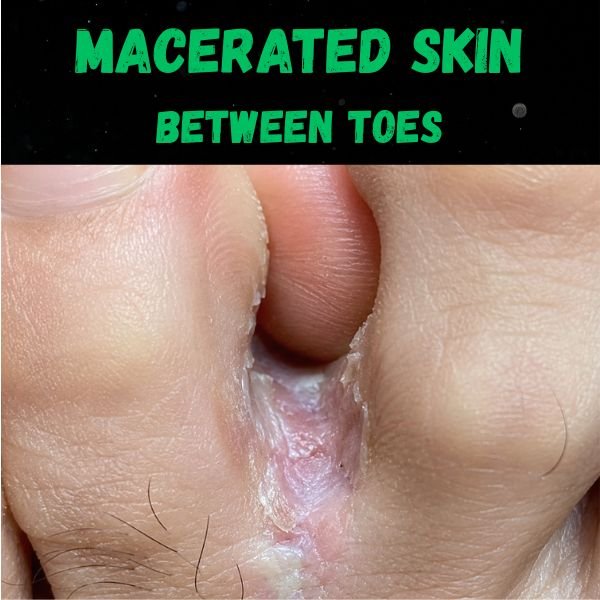
Have you ever taken a long bath or spent a lot of time in a swimming pool and noticed that your fingers look wrinkled and pale? That temporary change arises from prolonged moisture exposure. But when the same thing happens repeatedly in places such as the feet, skin folds, or around a wound, it can become more than just a temporary wrinkle. This is called skin maceration, or simply macerated skin.
The problem is particularly common on the feet because sweat, tight shoes, socks, and humidity can trap moisture against the skin for hours. Keeping your feet and the spaces between your toes clean and dry is an important part of preventing problems such as athlete’s foot.1
If you’ve noticed macerated skin between your toes, however, don’t automatically assume that it’s just sweat. White, soft, peeling skin between the toes can be a sign of athlete’s foot (tinea pedis), particularly when there is itching, burning, scaling, or cracking. The important point is that maceration itself is a change in the skin, not a diagnosis. Several different conditions can produce it.
So, What Exactly Is “Macerated Skin”?
Macerated skin is skin that has become unusually soft, pale, swollen, or wrinkled because it has been exposed to moisture for too long.
Think of what happens to your fingertips after a long shower. The skin becomes wrinkly and feels different from normal. Now imagine keeping a particular area of skin constantly damp for many hours or even days. The outer layer of skin can become excessively hydrated and start losing some of its normal strength.
This is known as maceration.
Water isn’t necessarily the only source of moisture. Sweat, wound fluid, drainage from an infection, and moisture trapped under clothing, footwear, or a dressing can all contribute.
That is why macerated skin is often seen in areas where moisture doesn’t evaporate easily. The spaces between the toes are a classic example. Skin folds under the breasts, abdomen, groin, or between other closely touching skin surfaces can also become macerated.
The important thing to remember is that maceration describes what has happened to the skin. It doesn’t tell us why it happened.
For example, two people may have white, soggy skin between their toes. One might simply have very sweaty feet and tight shoes, while the other might have tinea pedis, a fungal infection. They may look similar at first, but the treatment would be different.
What Does Macerated Skin Actually Look and Feel Like?
The appearance of macerated skin can vary depending on how severe the moisture exposure is and what caused it.
In mild cases, the skin may simply look pale, wrinkled, and softer than usual. If moisture exposure continues, it can become white or grayish, swollen, and noticeably soggy. The surface may begin to peel or rub off easily.
Some people describe the sensation as feeling like the skin has become “waterlogged.”
You may notice:
- White or pale skin
- Soft, soggy or swollen skin
- Wrinkling
- Peeling or scaling
- Small cracks or fissures
- Tenderness or soreness
- Burning or itching
- Raw or eroded areas
Not everyone with macerated skin will have itching or pain. These symptoms depend largely on the underlying cause.
For instance, skin that has simply remained wet after swimming may be wrinkled and pale but otherwise completely comfortable. On the other hand, macerated skin between the toes caused by athlete’s foot may be itchy, burning, cracked, and sometimes have an unpleasant odor.
This is why looking at the skin alone isn’t always enough to determine the cause.
Why Does Skin Become Soft, White, and Wrinkled?
The outermost part of your skin acts as a protective barrier. One of its jobs is to control how much water enters and leaves the skin.
When the skin stays wet for a prolonged period, this balance changes. The outer layer absorbs water and becomes softer and more swollen. At the same time, prolonged moisture can weaken the skin barrier.
This matters because healthy skin is designed to protect you from friction, irritants, and microorganisms. Once it becomes excessively soft and fragile, it can be easier to damage.
That’s why repeatedly wet skin can develop tiny cracks, peeling, or erosions.
So where does all that moisture come from?
Sometimes the answer is obvious-you’ve been swimming or bathing. But in everyday life, the cause can be much less obvious.
Sweat is a major culprit, particularly on the feet. If you wear closed shoes for several hours, sweat has nowhere to evaporate. Your socks absorb some of it, but the skin can remain damp for a long time.
Hot and humid weather can make this even worse.
Tight or poorly ventilated footwear can also trap heat and moisture. This is one reason people who spend long hours wearing closed shoes may repeatedly develop problems between their toes.
Maceration can also occur around wounds. If a wound produces a lot of fluid and the surrounding skin remains wet, the skin around it can become soft and fragile.
Similarly, a dressing that keeps an area excessively moist can sometimes contribute to maceration.
So while water is the most obvious cause, anything that keeps the skin continuously moist can potentially contribute to maceration.
Is Moisture Always the Problem, or Can Something Else Cause It?
Moisture is central to maceration, but the underlying reason for that moisture can be very different from one person to another.
For example, someone with excessive sweating may develop macerated skin simply because sweat remains trapped against the skin. Someone else may have an inflammatory skin condition affecting a skin fold, while another person may have a fungal infection.
Friction can make the problem worse.
Imagine the skin between your toes remaining damp inside a pair of shoes all day. Every step creates a small amount of friction between the toes. When the skin is already soft from moisture, that repeated friction can cause irritation, peeling, and tiny breaks in the skin.
This combination of moisture + friction + heat is particularly important in areas where skin touches skin.
A condition called intertrigo is one example. It commonly develops in skin folds where heat, moisture, and friction come together. In some cases, bacteria or fungi can then grow in the irritated area.
This is why simply saying “your skin is macerated because it’s wet” doesn’t always tell the whole story.
The next question should be: Why is the skin staying wet in the first place?
Macerated Skin Between Toes: Is It Just Sweat or Athlete’s Foot?
This is probably the most common situation that makes people search for macerated skin in the first place.
You look between your toes and notice that the skin has become white, soft, and almost soggy-looking. Sometimes it peels when you rub it. You may also notice itching or an unpleasant smell.
One possibility is simply excessive moisture.
But another very common possibility is interdigital tinea pedis, better known as athlete’s foot.
Athlete’s foot is a fungal infection caused by dermatophytes. The infection commonly affects the spaces between the toes, particularly the area between the fourth and fifth toes. The fungus thrives in warm, moist environments, which makes sweaty feet and enclosed footwear an ideal setting.
The infection can cause the skin to become macerated, which is why fungal infection and maceration are sometimes confused with each other.
A useful way to think about it is:
The fungus can cause the skin to become macerated, but macerated skin does not necessarily mean you have fungus.
If you have persistent itching, peeling, scaling, cracking, burning, or recurrent white skin between the toes, athlete’s foot becomes more likely.
White, Soggy Skin Between Your Toes? Here’s What It Could Mean
If you have white skin between your toes, there are several possibilities.
The simplest explanation may be excessive sweating. If your feet stay damp inside shoes all day, the skin can become soft and pale without there being an infection.
But if the problem keeps returning despite keeping your feet dry, it is worth considering athlete’s foot. It often causes itching and peeling in addition to the characteristic white, soggy appearance.
Other possibilities include intertrigo, irritant dermatitis, eczema, and bacterial infection.
Sometimes more than one problem can occur at the same time. For example, a fungal infection may damage the skin barrier, and the resulting maceration can make the area more vulnerable to secondary bacterial infection.
This is one reason persistent or severe toe-web problems shouldn’t always be treated as “just sweaty feet.”
Is Macerated Skin Between the Toes Always a Fungal Infection?
No.
This is one of the most important things to understand about macerated skin between toes.
Maceration is a physical change caused by prolonged moisture. A fungal infection is a specific medical condition. They can occur together, but they aren’t the same thing.
If your feet become sweaty after a long day and the skin between your toes turns temporarily white and wrinkled, that doesn’t automatically mean you have athlete’s foot.
On the other hand, if the area remains persistently white and soggy and is accompanied by itching, peeling, scaling, cracking, burning, or recurrent symptoms, a fungal infection becomes more suspicious.
Bacterial infections can also affect the toe webs, particularly when the skin barrier has already been damaged. These infections may cause more pronounced redness, erosion, discharge, or odor.
So if the appearance isn’t improving after keeping the area dry—or if the symptoms are getting worse—it’s better to determine the underlying cause rather than repeatedly applying random creams.
How Can You Tell Maceration From Athlete’s Foot?
There isn’t always a perfect way to tell the difference just by looking at the skin.
However, some clues can help.
Simple maceration from moisture tends to improve when the area is allowed to dry and the source of moisture is controlled. It may occur after prolonged sweating, swimming, bathing, or wearing damp footwear.
Athlete’s foot, on the other hand, tends to persist or recur. It commonly produces itching, scaling, peeling, fissures, and burning, particularly between the toes. It can also spread to other parts of the foot.
In uncertain cases, a dermatologist can examine the skin and, when necessary, perform a simple test such as a skin scraping to look for fungal elements.
That’s important because treating the wrong condition can delay improvement.
How to Get Rid of Macerated Skin and Keep It From Coming Back
If you’ve noticed macerated skin, the first step isn’t necessarily to reach for a cream. The more useful question is: why is the skin staying wet?
If the problem is simply excessive moisture, removing that moisture may be enough for the skin to gradually return to normal. Keep the affected area clean and dry, change damp clothing or socks, and avoid anything that continuously traps sweat against the skin.
However, if the maceration is being caused by athlete’s foot, eczema, intertrigo, or a bacterial infection, simply drying the area may not completely solve the problem. The underlying condition needs to be addressed as well.
This is particularly important when macerated skin between the toes keeps coming back. Repeatedly drying the skin without treating an underlying fungal infection, for example, may provide only temporary relief.
So, rather than asking only, “How do I dry this skin?”, think about the bigger question: “What is making this area stay wet or irritated?”
If Your Feet Are Always Sweaty, Here’s What Can Help
If your socks are regularly damp by the end of the day, excessive sweating may be playing a bigger role than you realize.
Sweaty feet create exactly the kind of warm, moist environment in which maceration and fungal infections can thrive. The problem can become even worse if you spend most of the day in closed shoes.
Start with simple changes. Change your socks when they become damp and allow your shoes to dry completely before wearing them again. Breathable footwear can also help reduce the amount of moisture trapped around the feet.
If you have persistently excessive sweating despite these measures, you may have plantar hyperhidrosis. In that situation, a dermatologist can suggest treatments specifically aimed at reducing sweating.
The goal isn’t to make your feet completely dry all the time. It’s to prevent prolonged moisture from sitting against the skin for hours.
How I Recommend Keeping the Skin Between Your Toes Dry
The spaces between the toes are easy to overlook when drying yourself after a shower.
You may towel your feet and assume the job is done, while a small amount of moisture remains trapped between the toes. If this happens repeatedly, it can contribute to macerated skin and create a favorable environment for fungal growth.
After bathing, gently pat your feet dry and pay particular attention to the spaces between the toes. Don’t aggressively scrub or rub the skin, especially if it is already white, tender, or peeling.
If the skin is already damaged, rough rubbing can create tiny breaks and make irritation worse.
You should also avoid deliberately keeping the area damp with heavy creams or occlusive products unless a healthcare professional has specifically recommended them for your particular skin condition.
And remember that drying the skin is only part of the solution. If a fungal infection is responsible for the maceration, the infection itself may still need treatment.
Could Your Shoes and Socks Be Making the Problem Worse?
Sometimes the problem isn’t your skin at all-it’s what your skin is spending eight or ten hours trapped inside.
A pair of tight, poorly ventilated shoes can hold heat and sweat around your feet throughout the day. If the same shoes are worn repeatedly without enough time to dry, the moisture can accumulate.
Socks matter too. If your socks become wet with sweat, leaving them on for the rest of the day keeps the skin continuously moist.
Try to give your feet opportunities to dry. Change damp socks, allow shoes to dry thoroughly, and choose footwear that allows better ventilation when practical.
This becomes particularly important if you’ve already had athlete’s foot. Fungal organisms can persist in warm, damp environments, increasing the chance of recurrence.
If you frequently use communal showers, swimming pools, or locker rooms, wearing footwear such as flip-flops can also reduce direct contact with potentially contaminated surfaces.
What Should You Do If You Think You Have Athlete’s Foot?
If your macerated skin between the toes is accompanied by itching, peeling, scaling, burning, or recurrent cracking, athlete’s foot is one possibility worth considering.
Mild athlete’s foot can often be treated with an over-the-counter topical antifungal. The exact product and duration of treatment depend on the medication and the severity of the infection, so follow the product instructions rather than stopping as soon as the skin looks slightly better.
One common mistake is treating only the visible area. Fungal infections can extend beyond the spot that looks abnormal, so the medication generally needs to be used according to the directions on the package.
It’s also important to keep the feet dry during treatment. Otherwise, you may be repeatedly creating the same warm, moist environment that allowed the fungus to flourish in the first place.
If the condition isn’t improving, keeps returning, or you’re not sure whether it’s actually fungal, seeing a dermatologist is a better option than repeatedly trying different creams.
Can Macerated Skin Become Infected? Here’s When to Be Careful
Yes. And this is one reason persistent macerated skin shouldn’t always be ignored.
When skin becomes excessively soft and fragile, its protective barrier can become compromised. Small cracks and erosions may then provide an opportunity for bacteria or fungi to enter or multiply.
A mild case may simply look white and soggy. But increasing pain, redness, warmth, swelling, pus, or rapidly worsening skin changes are different.
An unpleasant smell can also occur, particularly when there is significant moisture or infection, although odor by itself doesn’t tell you exactly which organism is responsible.
If the skin is becoming increasingly painful, red, swollen, or draining fluid, don’t keep treating it as simple moisture damage.
People with diabetes should be particularly cautious about persistent foot problems because foot infections and wounds can become more serious.
When Should You Stop Treating It Yourself and See a Dermatologist?
Not every episode of soggy skin needs a doctor’s appointment. If your skin becomes temporarily wrinkled after swimming or a long bath and returns to normal after drying, there’s usually little reason to worry.
The situation is different when the problem is persistent, recurrent, painful, or difficult to identify.
It’s worth seeing a dermatologist if your skin doesn’t improve after you remove the source of moisture, or if you have significant itching, cracking, peeling, pain, discharge, swelling, or spreading redness.
You should also get it checked if you’ve tried an appropriate antifungal treatment and the problem isn’t improving. Not every rash between the toes is fungal, and using antifungal creams repeatedly when the diagnosis is wrong won’t necessarily help.
A dermatologist can usually narrow down the cause from the appearance and history. If necessary, a simple test of skin scrapings can help determine whether a fungal infection is present.
Getting the diagnosis right is often the quickest way to get the skin back to normal.
How Can You Prevent Macerated Skin From Coming Back?
Once your skin has healed, prevention is mostly about controlling the things that caused the problem in the first place.
If sweaty feet were the issue, focus on keeping them as dry as reasonably possible. If your shoes stay damp, give them enough time to dry before wearing them again. Change socks when they become wet, and avoid spending the entire day in footwear that traps excessive heat and moisture.
If you have recurring athlete’s foot, prevention becomes even more important. Keep your feet dry, avoid sharing towels or footwear, and wear protective footwear in communal wet areas.
And don’t forget the spaces between your toes. They’re small, easy to overlook, and often where the problem starts.
The good news is that macerated skin is often reversible once the underlying cause is addressed. The key is not simply to dry the skin for a day or two, but to change whatever is repeatedly exposing it to excessive moisture.
Frequently Asked Questions
Q. Why Does My Skin Turn White When It’s Wet?
A. Because the outer layer of your skin absorbs water and becomes swollen and softer.
This is why your fingers may become wrinkled after a long bath. When moisture exposure is prolonged or repeated, the effect can become more pronounced and the skin may look white, soggy, or fragile.
If the change disappears after the skin dries, it’s usually simply a response to moisture. Persistent white or peeling skin deserves more attention because an underlying condition such as athlete’s foot may be involved.
Q. Why Is the Skin Between My Toes White and Soggy?
A. The most straightforward explanation is excess moisture, particularly sweat trapped inside socks and shoes.
However, athlete’s foot is another common possibility. If the white, soggy skin is accompanied by itching, peeling, scaling, burning, or cracking, a fungal infection becomes more likely.
Other conditions, including irritation, intertrigo, and bacterial infection, can sometimes produce similar changes.
Q. Does Macerated Skin Mean I Have a Fungal Infection?
A. Not necessarily. Maceration simply means that the skin has become excessively soft and waterlogged because of prolonged moisture.
A fungal infection can cause maceration, but so can sweat, prolonged water exposure, occlusion, friction, and other skin problems.
If the problem keeps recurring or is associated with itching and peeling, it is worth getting the cause properly assessed.
Q. How Long Does Macerated Skin Take to Heal?
A. Mild maceration caused purely by moisture can improve fairly quickly once the skin is allowed to dry and the source of moisture is removed.
However, the recovery time depends on how severe the skin damage is and whether another condition is involved.
If athlete’s foot, eczema, or bacterial infection is responsible, the skin may not return to normal until the underlying condition is treated.
If your skin remains macerated despite keeping it dry, that’s a good reason to have it examined.
Q. Should I Put Moisturizer on Macerated Skin?
A. Usually, you don’t want to add more moisture to skin that is already excessively wet and soggy.
That doesn’t mean moisturizers are always wrong. The right approach depends on why the skin is macerated and where it is located.
For example, treatment of dry, cracked skin is very different from treatment of wet, macerated skin between the toes. Applying a heavy, occlusive product between already-moist toes could potentially make the environment even more humid.
If you’re unsure what your skin needs, it’s better to identify the cause first rather than simply applying a moisturizer.
Q. What Is the Fastest Way to Dry Skin Between the Toes?
A. Gently drying the area after bathing, changing damp socks, and allowing footwear to dry are simple but effective measures.
Avoid aggressively rubbing or scrubbing the skin. If it is already macerated, this can cause further damage.
If the skin continues to become white and soggy despite keeping it dry, look for an underlying cause such as athlete’s foot or excessive sweating.
Q. When Should I See a Dermatologist for Macerated Skin?
A. If the problem is brief and clearly related to water exposure, you probably don’t need medical treatment.
But if you have persistent or recurrent macerated skin, especially between the toes, a dermatologist can help determine whether you’re dealing with a fungal infection, excessive sweating, dermatitis, bacterial infection, or something else.
Seek medical attention sooner if there is significant pain, spreading redness, swelling, warmth, pus, deep cracks, or rapidly worsening symptoms.