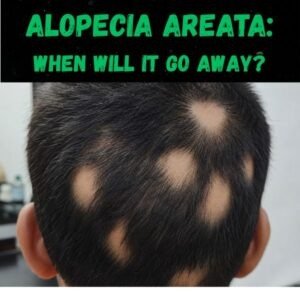
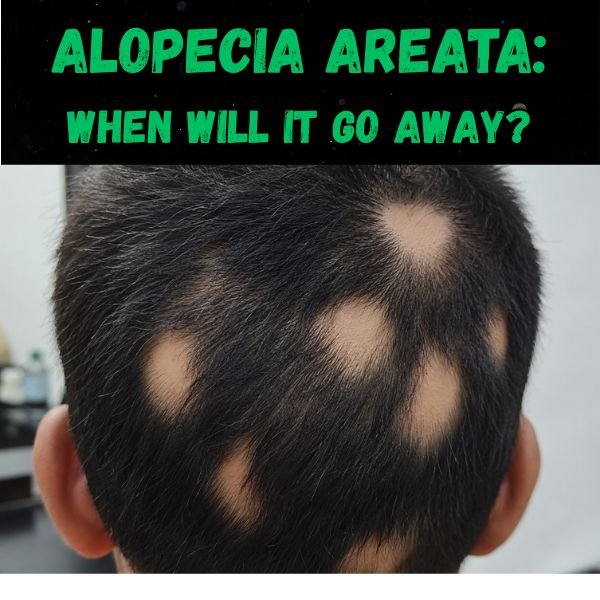
Imagine looking in the mirror one morning and noticing a small, perfectly smooth bald patch on your scalp. You don’t remember cutting your hair there, you haven’t injured the skin, and there doesn’t seem to be any obvious reason for it.
One possibility is alopecia areata.
Alopecia areata is a condition in which the body’s immune system mistakenly attacks hair follicles. Hair follicles are tiny structures in the skin responsible for producing hair. When they are targeted, hair growth can suddenly stop, leading to patches of hair loss.
The word “alopecia” simply means hair loss, while “areata” refers to the patchy pattern the condition often creates.
The important thing to know is that alopecia areata is usually nonscarring. In other words, the hair follicle isn’t necessarily permanently destroyed. That’s one reason hair can grow back after an episode of hair loss.
Alopecia areata can affect almost anyone. It can begin in childhood, during the teenage years, or in adulthood, and it can affect both men and women.
For some people, the condition produces one small bald patch. For others, several patches may appear or the hair loss may become much more extensive.
And this leads to one of the biggest frustrations with alopecia areata: there isn’t one predictable pattern that everyone follows.
Some people have one episode and never experience another. Others go through periods of hair loss and regrowth for years.
What Causes Alopecia Areata?
So, why would your immune system suddenly decide that your own hair follicles are a problem?
Unfortunately, there isn’t one simple answer.
Researchers believe alopecia areata develops through a combination of genetic susceptibility and other environmental or biological factors. Having certain genes may make someone more likely to develop the condition, but genetics alone don’t explain every case.1
In a healthy person, the immune system is designed to recognize and attack things that could harm the body, such as certain viruses or bacteria. With alopecia areata, that immune response appears to become misdirected toward the hair follicle.
The result is inflammation around the follicle and disruption of normal hair growth.
A family history of alopecia areata can increase the likelihood of developing it. The condition is also associated with some other autoimmune and allergic conditions.
But here’s something important: many people with alopecia areata cannot identify any obvious reason why it happened to them.
You may have never had an autoimmune condition before. You may eat well, exercise, take care of your hair, and still develop a bald patch.
It isn’t because your hair is dirty. It isn’t because you didn’t wash your scalp enough. And it isn’t something you necessarily did wrong.
That matters because people often look for something they can blame when sudden hair loss appears.
In reality, alopecia areata is a complex immune condition, and its exact cause can differ from one person to another.
Did Stress Cause Your Alopecia Areata?
Stress is often blamed for sudden hair loss, and this can make things even more confusing.
Perhaps you’ve been going through a difficult period at work or school. Maybe you’ve had relationship problems, an illness, or another major life event. Then you notice a bald patch and immediately think, “Was this caused by stress?“
Stress may play a role as a potential trigger in some people who are already susceptible to alopecia areata. But it’s too simplistic to say that stress is the cause.
Many people with alopecia areata have no obvious trigger at all. So don’t automatically blame yourself.
Having a stressful few months doesn’t mean you “caused” your alopecia areata. And while learning healthy ways to manage stress can be useful for your overall health and wellbeing, there is no reason to think that simply eliminating every stressful situation will guarantee that your hair loss stops.
What Are the Early Symptoms of Alopecia Areata?
The first sign of alopecia areata is often surprisingly easy to miss.
You might simply notice a small area where your hair looks thinner than usual. Then, when you take a closer look, you realize there is a clearly defined patch where the hair has disappeared.
A typical patch may be round or oval and unusually smooth. The skin underneath can look fairly normal, without the obvious redness, scaling, or sores that you might expect from a skin condition.
The patch may start small and stay that way, or additional areas may develop.
Some people notice hair loss on the scalp, while others develop patches in the beard, eyebrows, eyelashes, or other body hair.
There can also be subtle sensations around an affected area. Some people report itching, tingling, burning, or altered sensation before or around the time hair loss occurs. However, these sensations aren’t present in everyone.
Another clue doctors sometimes look for is called an “exclamation-point hair.” These are short hairs that are narrower near the scalp and can appear around the edge of a bald patch.
You don’t need to have every one of these signs to have alopecia areata.
And importantly, not every bald patch is alopecia areata. Other conditions can cause patchy hair loss, including fungal infections, certain forms of scarring hair loss, and other hair disorders.
That’s why a proper diagnosis is important, especially if the hair loss is new or progressing quickly.
How Is Alopecia Areata Diagnosed?
The good news is that diagnosing alopecia areata usually doesn’t require a complicated procedure.
A dermatologist will first look carefully at the pattern of hair loss and examine the scalp or affected area.
They may ask questions such as when you first noticed the hair loss, whether it has changed, whether you’ve experienced similar episodes before, and whether anyone in your family has had alopecia areata or other types of hair loss.
The doctor may also look at your eyebrows, eyelashes, beard, and nails because alopecia areata can affect more than scalp hair.
A closer examination of the hair and scalp can provide additional clues. Dermatologists may use a magnifying tool or dermoscope to examine individual hairs and follicle openings.
They may look for findings such as exclamation-point hairs, broken hairs, or other changes associated with active alopecia areata.
In straightforward cases, this examination may be enough to make the diagnosis.
If the situation isn’t clear, the doctor may consider additional testing. Depending on your symptoms and medical history, this can include blood tests or, in some cases, a small skin biopsy.
These tests aren’t automatically necessary for everyone with patchy hair loss. Their purpose is to help rule out other conditions when the diagnosis isn’t obvious.
That’s important because treating the wrong cause of hair loss can waste time while the actual condition continues.
How Long Does Alopecia Areata Last?
This is where things get frustrating.
There is no single answer to “How long does alopecia areata last?”
For some people, a small bald patch may stop expanding and eventually start growing hair again. For others, hair loss can continue for months or longer, or new patches may appear after an initial area begins recovering.
In other words, alopecia areata doesn’t follow a reliable countdown clock.
You might see something like:
Hair loss → stable patch → hair begins growing back → normal-looking hair
But someone else might experience:
Hair loss → partial regrowth → another patch → more hair loss → regrowth
Both patterns can occur.
Some people experience spontaneous hair regrowth without medical treatment, particularly when the disease is limited. Having only a few patches and having those patches for a relatively short time are generally more favorable signs.
On the other hand, extensive or long-lasting hair loss tends to have a less predictable outlook.
This is also why you shouldn’t judge your future based on what happened to a friend, relative, or someone you see online. Two people can have the same diagnosis and very different experiences.
The same person can even have different episodes that behave differently.
And this brings us to one of the most important things to understand about alopecia areata: hair growing back doesn’t necessarily mean the condition can never return.
The immune system’s tendency to target the hair follicles may remain, which is why some people experience repeated episodes of hair loss and regrowth.
Does Alopecia Areata Go Away on Its Own?
Yes, it can.
One of the more surprising things about alopecia areata is that hair can sometimes grow back without treatment. This is especially possible when the condition is limited to a small number of patches.
But there’s an important catch: hair growing back doesn’t necessarily mean the condition is gone forever.
A person can experience complete regrowth and later develop another episode of hair loss. In other words, there is a difference between the current bald patch resolving and the underlying tendency toward alopecia areata disappearing permanently.
A long-term study of 104 people found significant or full hair regrowth in 74% of childhood-onset cases, 94% of adult-onset cases, and 100% of late-onset cases. However, the same study also found that relapses were fairly common: 52% of childhood-onset patients, 44% of adult-onset patients, and 30% of late-onset patients experienced relapses.2
Those numbers shouldn’t be treated as a prediction for one individual. Different studies involve different groups of people, disease severities, and follow-up periods.
The takeaway is simpler: alopecia areata can go away on its own, but it can also come back.
Is Alopecia Areata Curable?
At the moment, there isn’t a guaranteed permanent cure for alopecia areata.
That doesn’t mean it can’t be treated.
The goal of treatment is usually to help stop or reduce active hair loss and encourage hair regrowth. Depending on the severity and location of the hair loss, some people may be monitored without treatment, while others may benefit from medications.
This distinction is important because it explains why someone might say, “My alopecia was cured,” after their hair grows back, even though a dermatologist may describe the condition as being in remission or inactive.
Regrowth and permanent cure are not the same thing.
The immune system may become quiet for a period and then become active around the hair follicles again. That’s one reason recurrence is such an important part of understanding alopecia areata.
Why Does Alopecia Areata Come Back After Treatment?
This is probably the most frustrating part of the condition.
Imagine that treatment helps your hair grow back. You understandably think the problem is over. Months or even years later, you notice another bald patch.
What happened?
The simplest explanation is that treatment can control the disease without permanently removing the immune system’s tendency to target hair follicles.
Think of it like turning down an alarm rather than permanently removing the alarm system. While treatment is working, the immune attack may be reduced enough for hair to grow. But if the immune response becomes active again, another episode of hair loss can occur.
This is why alopecia areata can be recurrent.
And recurrence isn’t necessarily a sign that you did something wrong. It doesn’t automatically mean that you failed to follow your treatment correctly, either.
How Often Does Alopecia Areata Come Back?
There isn’t one universal recurrence percentage that applies to everyone.
For example, a long-term follow-up study of 104 patients reported relapse rates of 52% for childhood-onset alopecia areata, 44% for adult-onset disease, and 30% for late-onset disease. Interestingly, 79% of the relapses occurred within the first four years of follow-up.
A newer prospective study followed 400 patients for 52 weeks and found that 31.8% experienced a relapse by week 52. The median time to relapse in that study was 28 weeks. Patients who had experienced previous episodes had a higher relapse risk, with a hazard ratio of 1.61.3
Why are these numbers different?
Because they’re measuring different groups of people over different periods. One study followed patients for much longer, while the newer study looked at relapse over one year.
So rather than asking, “What is the exact percentage chance that my alopecia will come back?”, a better question is:
“What features of my alopecia make recurrence more or less likely?”
What Determines How Quickly Alopecia Areata Comes Back?
Unfortunately, doctors can’t look at someone and give them an exact date when their next episode will happen.
However, researchers have identified several factors associated with a more difficult or persistent course.
Age When Alopecia Areata Begins
Age appears to matter.
Earlier onset, particularly during childhood, has been associated with a more severe or persistent course in several studies. In the long-term study mentioned above, relapse frequency was higher in childhood-onset disease than in adult- or later-onset disease.
That doesn’t mean someone who develops alopecia as a child will definitely have severe or recurrent disease. It simply means age of onset is one piece of the bigger picture.
How Much Hair Is Lost
The amount of hair lost at the beginning can also matter.
A few small patches generally have a better outlook than extensive hair loss. Research has consistently identified greater extent of hair loss as an unfavorable prognostic factor.
This is one reason dermatologists may use a measurement called the Severity of Alopecia Tool, or SALT score, to estimate how much of the scalp is affected.
How Long the Disease Has Been Active
Long-lasting disease tends to be harder to manage than a short-lived episode.
A recent prospective study also found that disease activity and duration were important factors when predicting treatment response and recurrence.
Previous Relapses
Your own history can provide useful information.
If you’ve already experienced repeated episodes of alopecia areata, the possibility of another episode may be higher. The recent 400-patient prospective study found that previous episodes were associated with increased relapse risk.
Ophiasis Pattern
There’s a particular pattern called ophiasis, where hair loss follows a band-like area around the sides and back of the scalp.
This pattern has traditionally been associated with a less favorable prognosis. Recent research also describes ophiasis as a more chronic and treatment-resistant form of alopecia areata, although different ophiasis patterns can have different outcomes.
Nail Changes
Your fingernails can sometimes provide another clue.
People with alopecia areata can develop nail changes such as tiny pits, ridges, or roughness. Nail involvement has been associated with more severe forms of the disease in research.
Family History and Other Conditions
A family history of alopecia areata and certain associated autoimmune or allergic conditions may also be linked with a less favorable course.
Researchers have identified factors such as early age of onset, extensive hair loss, ophiasis, nail changes, family history, and associated autoimmune disorders as potential markers of poorer prognosis.
The important word here is potential.
These factors can change the odds, but they cannot tell you exactly what will happen to your hair.
How Can You Minimize or Delay Alopecia Areata Recurrence?
This is where it’s important to avoid unrealistic promises.
There is currently no guaranteed lifestyle method that can prevent alopecia areata from coming back.
You may see advice online claiming that a particular food, supplement, oil, shampoo, or stress-relief technique can prevent another episode. Be cautious with those claims.
Instead, focus on things that can actually help you manage the condition.
If you’re receiving treatment from a dermatologist, follow the treatment plan and attend recommended follow-up appointments. Don’t stop prescription treatment on your own simply because your hair has started growing back.
This matters because some treatments suppress the disease while they’re being used. Research into systemic treatments has shown that stopping an effective treatment can be followed by loss of the treatment benefit in some patients.
For example, in a long-term follow-up of patients with severe alopecia areata who had responded to baricitinib, 80% of responders who stopped treatment had lost treatment benefit by week 152, compared with 7% of those who continued treatment.4
That doesn’t mean everyone needs lifelong medication. Treatment decisions depend on the individual, and some people with limited disease may not need ongoing treatment.
The practical goal is to work with a dermatologist to monitor the disease and respond early if it becomes active again.
You can also protect areas with little or no hair from excessive sun exposure and avoid unnecessary trauma to fragile hair and scalp skin.
Managing stress can be useful for your general wellbeing, too. But it’s important not to turn stress management into a promise that you can prevent alopecia areata simply by “relaxing.”
Can Alopecia Areata Spread to the Whole Scalp or Body?
Yes, alopecia areata can become more extensive, but having one bald patch does not mean you will inevitably lose all your hair.
The condition exists on a spectrum.
Someone may have one or two small patches for a short period. Another person may gradually develop larger or additional areas of hair loss.
In severe cases, alopecia areata can affect nearly the entire scalp or extend to body hair.
Two terms are especially important:
- Alopecia totalis means loss of all or nearly all scalp hair.
- Alopecia universalis is the most extensive form, involving loss of essentially all or nearly all hair on the scalp and body.
Alopecia universalis is uncommon, so it’s important not to assume that a small bald spot will automatically progress to this stage.
What Makes Spread More Likely?
There isn’t a simple formula that can tell you whether your alopecia will spread.
However, several features have been associated with a more severe course, including early age of onset, extensive hair loss, long disease duration, ophiasis, nail changes, family history, and certain associated autoimmune conditions.
The amount of hair loss at presentation is particularly important because greater severity has been associated with poorer long-term outcomes.
Still, these are risk factors, not predictions.
Someone can have several unfavorable features and still experience substantial regrowth. Likewise, a person with mild disease can experience another episode later.
Can Alopecia Areata Cause Complete Hair Loss?
Yes.
In severe cases, alopecia areata can cause complete or nearly complete loss of scalp hair. This is called alopecia totalis.
If hair loss extends to essentially the entire scalp and body, it’s called alopecia universalis.
But complete hair loss is not the typical outcome for everyone with alopecia areata.
If you’ve discovered one small patch, there’s no reason to assume you’re heading toward total hair loss.
The best approach is to have the condition properly diagnosed and to monitor how it behaves over time.
What Is the Best Treatment for Alopecia Areata?
There’s no single treatment that is “best” for every person.
The right treatment depends on factors such as how much hair has been lost, how quickly the disease is progressing, how long you’ve had it, your age, other health conditions, and whether you’ve experienced previous episodes.
For a small number of patches, a dermatologist may recommend observation because spontaneous regrowth is possible.
Other people may benefit from topical corticosteroids or corticosteroid injections directly into affected areas. These treatments aim to reduce the immune activity around the hair follicles and encourage regrowth.
For more extensive disease, doctors may consider systemic treatments, including newer JAK inhibitor medications.
The important point is that treatment should be matched to the severity and circumstances of the disease rather than chosen simply because something is described online as the “strongest” treatment.
And there’s another distinction worth remembering:
A treatment that produces regrowth isn’t necessarily a treatment that prevents future relapse.
Those are two different goals.
What Should You Do If You Think You Have Alopecia Areata?
If you’ve suddenly discovered a smooth bald patch, don’t panic-but don’t automatically assume it’s alopecia areata either.
Take a clear photograph of the area so you can monitor changes. Avoid repeatedly pulling the surrounding hair to test whether it’s falling out.
Then consider making an appointment with a dermatologist, particularly if the patch is growing, additional patches appear, or you’re losing eyebrow, eyelash, beard, or other body hair.
A proper diagnosis matters because several other conditions can cause patchy hair loss, and they don’t all require the same treatment.
The sooner you understand what’s actually happening, the easier it becomes to make sensible decisions instead of worrying about every strand of hair.
Frequently Asked Questions
Q. Can alopecia areata go away on its own?
A. Yes. Some people experience spontaneous hair regrowth, particularly when hair loss is limited. However, regrowth doesn’t guarantee that another episode won’t occur.
Q. How quickly can alopecia areata come back?
A. There’s no fixed timeline. A 400-patient prospective study found a median relapse time of 28 weeks among patients who relapsed during its 52-week follow-up, while a separate long-term study found that 79% of relapses occurred within the first four years.
Q. Can alopecia areata spread?
A. Yes, it can progress from a few patches to more extensive scalp or body hair loss. But progression is not inevitable.
Q. Can alopecia areata cause complete baldness?
A. Yes. Severe forms include alopecia totalis and alopecia universalis, although these represent more extensive forms of the disease.
Q. Can you feel alopecia areata before you see it?
A. Some people experience itching, tingling, burning, or other sensations, but many don’t. There is no reliable home touch test that can diagnose alopecia areata.
Q. Will my hair grow back?
A. It can. Hair regrowth is possible with or without treatment, but the likelihood and speed of regrowth vary depending on factors such as the extent and duration of disease.
Conclusion
Alopecia areata is unpredictable, but unpredictable doesn’t mean hopeless.
A bald patch can be frightening because you don’t know whether it will stay small, disappear, return, or become more extensive. The good news is that hair follicles aren’t necessarily permanently destroyed, which means regrowth is possible.
At the same time, getting your hair back doesn’t necessarily mean the underlying condition can never return. Recurrence is a real part of alopecia areata, and studies show that the likelihood varies with factors such as age at onset, previous relapses, disease severity, duration, and certain clinical features.
There is no guaranteed way to predict exactly when your next episode will happen-or prevent it entirely.
What you can do is get an accurate diagnosis, understand your risk factors, follow an appropriate treatment plan when treatment is needed, and pay attention to new changes rather than assuming the worst.
Most importantly, a diagnosis of alopecia areata does not automatically mean permanent or complete baldness. For many people, the story involves periods of hair loss followed by periods of regrowth-and sometimes, a surprisingly normal-looking head of hair again.