
Sunscreen is one of the most important parts of a daily sun-protection routine. But choosing the right sunscreen can be confusing, especially with so many options ranging from SPF 30 to SPF 100, mineral and chemical formulas, gels, creams, and tinted sunscreens.
The good news is that you don’t need to memorize dozens of ingredients to make a good choice. Understanding a few basics-SPF, broad-spectrum protection, application amount, reapplication, and your skin type—can help you choose a sunscreen that provides meaningful protection.
Regular daily use of SPF 15 sunscreen can reduce your risk of developing squamous cell cancer (SCC) risk by about 40 percent, and lower melanoma risk by 50 percent.
– SkinCancerFoundation
What is SPF? How does it help to choose a sunscreen?
SPF (Sun Protection Factor) primarily describes how well a sunscreen protects against UV radiation that causes sunburn. It is not a measure of how long you can safely stay in the sun.
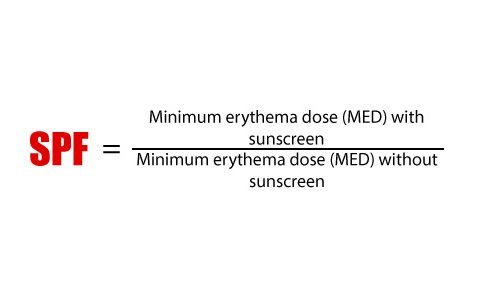
There is a significant difference between the SPF of sunscreens
A sunscreen with SPF 15 blocks 93% of sun rays. SPF 30 blocks 97% of sun rays. Thus, SPF 30 provides higher protection. For routine sun protection, dermatologists generally recommend choosing a broad-spectrum sunscreen with SPF 30 or higher.1
One of the biggest problems with sunscreen is under-application. SPF is determined by testing sunscreen at a standardized application thickness of 2 mg/cm², but people typically apply considerably less in real life. As a result, the protection they actually receive can be substantially lower than the SPF printed on the bottle.2
When and how much sunscreen should you apply?
Since the amount of sunscreen applied to the skin affects its sun protection. Therefore, you should use a specific amount to achieve the desired SPF labeled on a specific product.
- For the exposed areas of the entire body, an adult generally needs about 1 ounce (roughly a shot-glassful) of sunscreen. To cover the face, use about two finger-lengths of sunscreen as the required amount.
- Apply sunscreen evenly to all exposed skin, including commonly missed areas such as the ears, neck, hairline, and tops of the feet.
- Apply sunscreen last over the skin after applying other cosmetic products or moisturizers.

UV rays can’t be filtered easily by clouds and can even get through car glass or windows at home.
- Cloudy weather does not eliminate UV exposure, so sunscreen is still important when you are outdoors even when the sky is overcast. UVA can also pass through ordinary window glass, which makes sun protection particularly relevant during prolonged exposure near windows or while driving. For most people, however, wearing sunscreen indoors all day is not necessary simply because they are inside.
- Because sun exposure rises at high altitudes when rays hit and reflect off snow, apply sunscreen before skiing.
- Apply sunscreen 20-30 minutes before going outdoors during the day, regardless of the weather conditions.
- Reapply every 2 hours.
- Apply again if it is washed off by water (swimming/ bathing), excessive sweating, or wiped off the body.
- Use other sun-protective measures- clothing, hats, sunglasses, and sunscreens.
What sunscreen should you choose?
Store shelves stock many sunscreen formulations, making it difficult to choose a good sunscreen.
Choose a broad-spectrum sunscreen containing physical and chemical ingredients that can protect against a wide range of sunrays in the UV spectrum: UVA and UVB.
The choice of sunscreen also depends upon your skin type.
- Lotions and creams have an oily base and work best on dry skin. These formulations may also have moisturizing ingredients for excessive skin dryness.
- A gel formulation with a watery base works better for oily and acne-prone skin. Look for the “non-comedogenic” label on the sunscreen.
Choosing sunscreen according to skin problem:
| Skin concern | What to look for |
|---|---|
| Oily/acne-prone skin | Lightweight gel/fluid, non-comedogenic |
| Dry skin | Cream/lotion with moisturizing ingredients |
| Melasma | Tinted, broad-spectrum SPF 30+, preferably with iron oxides |
| Dark spots/PIH | Tinted sunscreen + strong UVA/visible-light protection |
| Sensitive skin | Fragrance-free; mineral filters may be better tolerated |
| Outdoor sports | Water-resistant SPF 50+ |
| Pregnancy | Broad-spectrum SPF 30+; mineral option if preferred |
| Children | Broad-spectrum, water-resistant SPF 30+ according to age |
Does sunscreen protect against visible light?
UV radiation does not cause all sun-related pigmentation. Visible light can also worsen hyperpigmentation and melasma, particularly in people with darker skin tones.
If pigmentation or melasma is your main concern, consider a tinted broad-spectrum sunscreen containing iron oxides. Iron oxides provide additional protection against visible light that ordinary untinted sunscreens may not provide.
What is the recommended SPF? Is SPF 100 better than SPF 50?
Higher SPF does provide somewhat greater protection against UV radiation, but the difference becomes relatively small at higher numbers. SPF 30 filters approximately 97% of UVB, SPF 50 about 98%, and SPF 100 about 99%.
This does not mean that SPF 100 is unnecessary, although most countries limit the SPF label on sunscreens at 50 and others at 30.3. People often apply less sunscreen than used during laboratory testing, so a higher SPF can provide an additional margin of protection. However, no SPF allows unlimited sun exposure, and higher SPF does not eliminate the need for reapplication, shade, clothing, or other sun-protective measures. Therefore,
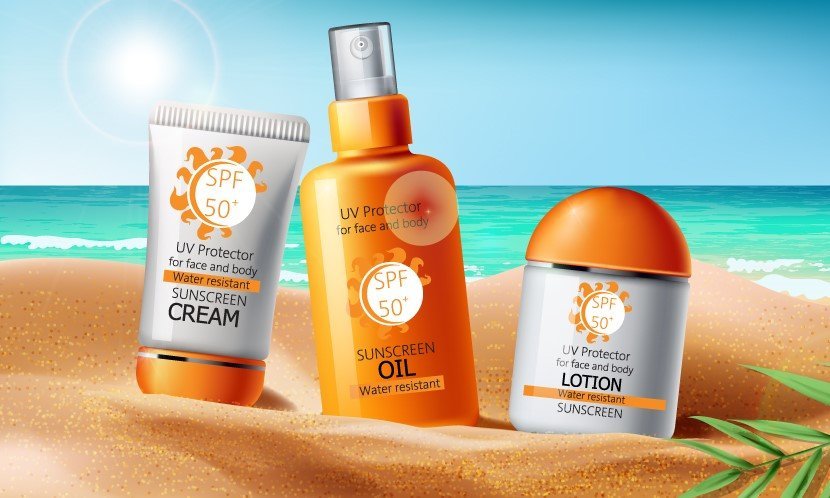
Many people, especially frequent sunbathers, believe sunscreens with SPF 70 or 100 can offer foolproof protection against the sun’s rays and the resulting damage. This is not true.
SPF beyond 50 doesn’t offer significantly additional protection, as is clear from the fact that sunscreens with SPF 50 offer protection against 98% of UVB rays as compared to SPF 100, which can block 99% of them.
Using sunscreens with higher SPF creates a false sense of security in overzealous users, and they might even skip other protective measures like sun protective clothing and accessories.
Can pregnant women or infants use sunscreens?
Sunscreens can protect the skin against sunburns and a wide spectrum of other sun-induced damage to the skin and other organs of the body.
Pregnant women can use sunscreens. They should:
- Prefer sunscreens containing only physical sun-blocking agents like Titanium and Zinc oxide.
- Avoid chemical sunscreens to prevent the fetus from being exposed to chemicals present in sunscreen.
For babies younger than 6 months, the primary approach is to avoid direct sun exposure and use shade and protective clothing whenever possible. When shade and protective clothing aren’t available, caregivers should apply a small amount of sunscreen to exposed areas, preferably mineral sunscreen. For babies 6 months and older, broad-spectrum SPF 30+ sunscreen can be used as directed.
Are sunscreens ingredients harmful to your body?
FDA concluded that few sunscreen ingredients are absorbed through the skin and into the blood.4
However, despite getting absorbed, these chemicals are not necessarily harmful to our bodies.
Since the benefits of applying sunscreen far exceed the possible harm (however uncertain). Therefore, you should continue using sunscreen until data from further studies is available.