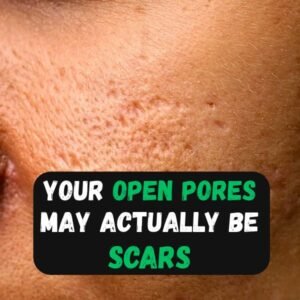
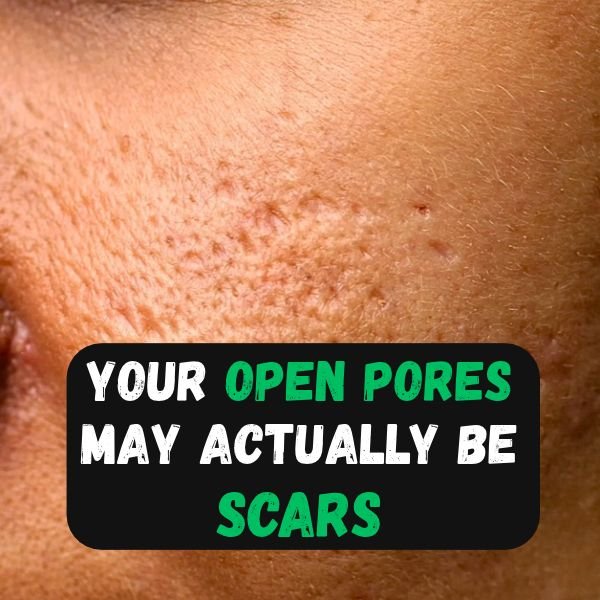
If you have ever looked closely at your face in the mirror and noticed tiny holes or dents on your cheeks, you might assume you have large pores, but there’s another possibility: some of those tiny holes may actually be acne scars.
This can be confusing because enlarged pores and acne scars can look quite similar, especially on the cheeks. However, they aren’t the same thing, and knowing the difference can help you choose the right skincare products or treatments.
The good news is that both concerns can often be improved. Let’s look at what enlarged pores really are, how acne scars develop, and what clues can help you tell them apart.
What Do Enlarged Pores Look Like?
First, let’s clear up one thing: pores are completely normal. They’re tiny openings in your skin connected to hair follicles and oil glands. They allow oil, also known as sebum, to reach the skin’s surface and help keep it moisturized.
So, why do some pores seem much bigger than others?
Several factors can make pores more noticeable, including genetics, oily skin, clogged pores, sun damage, and changes in skin elasticity. For example, if your skin produces a lot of oil, the openings may appear larger, particularly around your nose, forehead, and cheeks.
Enlarged pores usually look like small, round openings in the skin. They may become more noticeable when your face is oily or when you’re looking at your skin under bright lighting.1
You might also notice that your pores look different from one day to the next. That’s normal, too. Oil buildup, lighting, and the condition of your skin can all affect how visible they appear.
One important thing to remember is that pores can’t be permanently closed or erased. However, the right skincare routine may help make them look smaller and less noticeable.
Your Big Pores May Actually Be Acne Scars – Here’s How to Tell
Here’s where things get interesting. Sometimes, what looks like a large pore is actually a small depression left behind by acne.
When you have an inflamed pimple, especially a deep or painful one, the inflammation can damage the skin’s supporting structures. As the skin heals, it may not produce enough collagen to fill the damaged area completely. This can leave behind a tiny dent or pit.
These are called atrophic acne scars, and they’re particularly common on the cheeks.
Because some acne scars are small and round, they can easily be mistaken for enlarged pores. The difference becomes easier to spot when you look at their shape, depth, and overall pattern.
Signs You’re Looking at Enlarged Pores
Enlarged pores often appear as small, relatively uniform openings. They’re especially common around the nose and in areas where the skin produces more oil.
Your pores may also look more noticeable when your skin is oily or when dead skin cells build up around their openings.
If the openings are fairly similar in size and don’t look like deep dents, enlarged pores may be the main concern.
Signs You May Have Pitted Acne Scars
Acne scars often create a more uneven appearance. Instead of similar-looking openings, you may notice tiny dents of different shapes and depths.
The skin may look pitted, almost as if someone has pressed a fine needle into it. Some areas may appear smooth, while others have several small depressions close together.
A history of severe acne, painful pimples, or cystic breakouts can also provide a clue.
Another useful observation is that these dents tend to remain even after you’ve washed your face and removed excess oil. That’s because they’re related to changes in the skin’s structure rather than simply oil buildup.
Of course, enlarged pores and acne scars can occur together. You might have oily skin with visible pores and a few pitted scars on your cheeks at the same time.
If you’re unsure, a dermatologist can examine your skin and help identify what’s actually causing the uneven texture.
What Causes Acne Scars to Look Like Large Pores?
To understand why acne scars can resemble large pores, it helps to know a little about how your skin heals.
When a pimple becomes inflamed, the damage may extend beyond the skin’s surface. Your body responds by repairing the affected area, including producing collagen, a protein that helps keep skin firm and supported.
Sometimes, the healing process doesn’t replace the damaged tissue completely. When too little collagen forms in an area, the skin can sink inward, leaving a small depression.
This is how many depressed acne scars develop.
Because these depressions can be tiny, round, and close together, they may look like unusually large pores. The difference is that an acne scar involves a change in the skin’s structure, while an enlarged pore is an opening that is already part of normal skin.
Several factors can increase the risk of acne scarring, including deep inflammation, severe acne, and picking or squeezing pimples.
That’s why it’s important to treat inflamed acne early rather than repeatedly trying to pop every breakout.
And remember, acne scars aren’t a sign that you’ve done something wrong. They can develop even when you take good care of your skin.
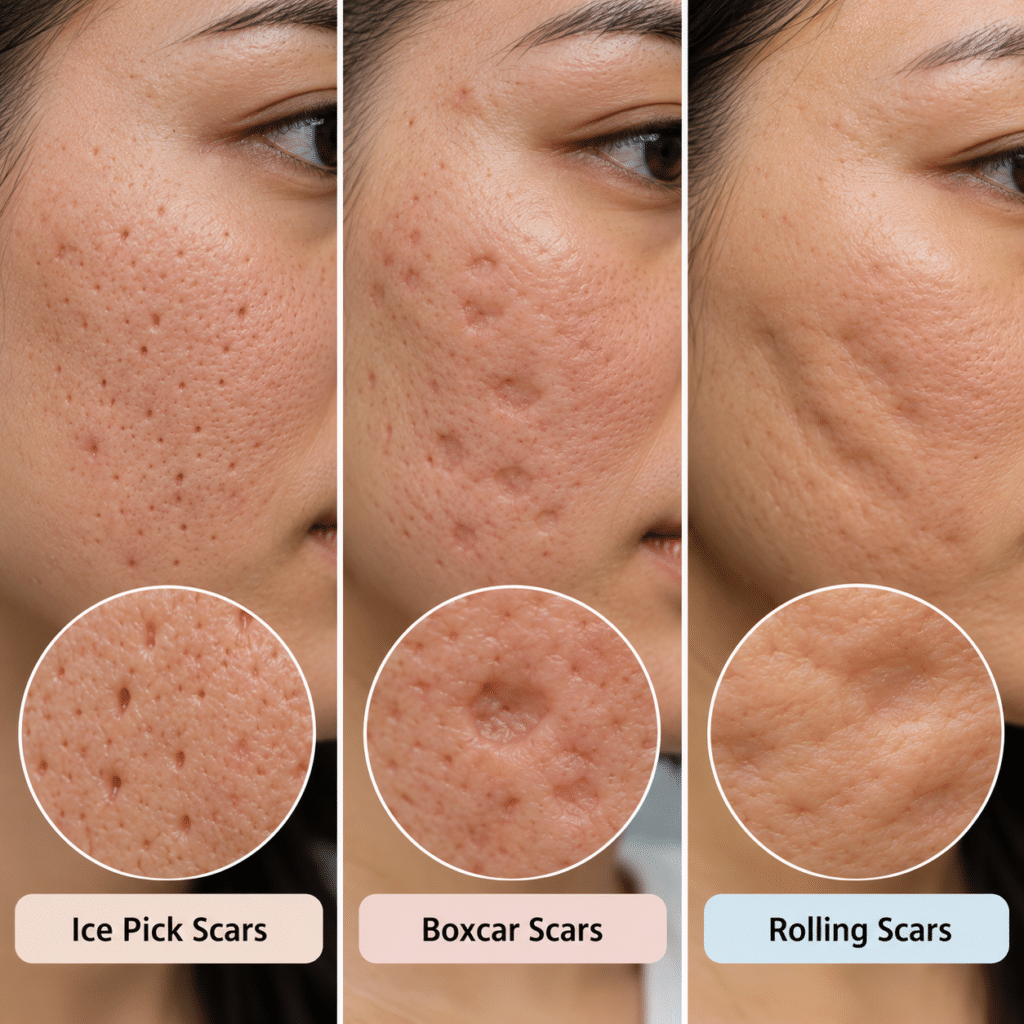
Types of Acne Scars That Can Look Like Large Pores
Not all acne scars look the same. Some are deep and narrow, while others are wider or create a wavy appearance across the skin.
Understanding the different types can help you make sense of those tiny holes or dents on your face.
Ice Pick Scars
Ice pick scars are narrow, deep depressions that look like tiny holes in the skin. They are usually small at the surface but extend deeper into the skin.
Because of their shape, they can easily be mistaken for enlarged pores, particularly when several appear close together on the cheeks.
However, an ice pick scar is deeper than an ordinary pore and may be difficult to improve with skincare products alone.
Boxcar Scars
Boxcar scars are wider depressions with more noticeable edges. They often look round or oval and may resemble small craters in the skin.
These scars can develop on the cheeks and temples, where they create an uneven or pitted appearance.
Unlike ice pick scars, which are narrow and deep, boxcar scars tend to have a broader surface and more defined sides.
Rolling Scars
Rolling acne scars create a wavy or uneven appearance across the skin. Rather than looking like individual tiny holes, they form shallow dips that make the skin appear bumpy under certain lighting.
These scars can develop when fibrous bands beneath the skin pull the surface downward.
You may notice them more when sunlight hits your face from the side or when you look in a mirror under bright lighting.
Can You Have More Than One Type of Acne Scar?
Absolutely. It’s quite common to have a combination of ice pick, boxcar, and rolling scars.
For example, your cheeks might have tiny, deep pits in one area and broader depressions in another. You may also have visible pores and some lingering discoloration from previous breakouts.
This is why there isn’t one acne scar treatment that works equally well for everyone. The shape, depth, and type of scar all matter when choosing a treatment.
What Should You Do If Your Pores Look Like Acne Scars?
Before buying another serum or adding more products to your skincare routine, take a moment to look at what you’re actually dealing with.
If your main concern is oily skin and visible pores, ingredients that help control oil and clear clogged pores may make a difference. If you’re noticing persistent dents or pits left behind by acne, you may need a different approach.
The key is understanding that enlarged pores and acne scars are different concerns, even when they look similar.
How to Treat Large Pores and Acne Scars
Now that you know the difference between enlarged pores and acne scars, the next question is how to make them less noticeable.
The good news is that there are several options. The right approach depends on whether you’re dealing with oily skin, clogged pores, shallow acne scars, or deeper dents left behind by previous breakouts.
Skincare products can help improve the appearance of pores and prevent new acne, while professional treatments may be needed to improve established scars. The important thing is to choose treatments based on what your skin actually needs, rather than trying every product you see online.
Can You Get Rid of Large Pores and Acne Scars?
Let’s start with the realistic answer: you can often make large pores less noticeable, but you can’t permanently close them. Pores are a natural part of your skin, and their size is influenced partly by genetics.
Acne scars are a different story. Because they involve changes in the skin’s structure, they may need more targeted treatment.
For example, a skincare routine may help clear clogged pores and control excess oil. However, if your cheeks have deep pits left behind by acne, a cleanser or serum alone is unlikely to fill those depressions.
This doesn’t mean you’re stuck with uneven skin forever. Treatments such as microneedling, laser resurfacing, and certain scar-specific procedures can improve the appearance of many depressed acne scars.
The key is setting realistic expectations. The goal is to improve skin texture, not to achieve perfectly poreless skin.
Skincare Ingredients That May Help Minimize Pores
If your pores look prominent because of excess oil or clogged openings, certain skincare ingredients may help.
They won’t remove deep acne scars, but they can make your skin look clearer and smoother over time.
Salicylic Acid
Salicylic acid is a useful ingredient for oily skin and clogged pores. It helps loosen dead skin cells and clear buildup inside the pores, which can make them look less noticeable.
It’s commonly found in cleansers, toners, and leave-on treatments.
If you’re new to salicylic acid, start with a product designed for your skin type and follow its instructions. Using it too frequently, especially alongside other exfoliating ingredients, can cause dryness, redness, or irritation.
Keep in mind that salicylic acid works mainly on clogged pores and acne. It won’t fill in deep pits caused by lost collagen.
Retinoids
Retinoids are vitamin A-related ingredients that can help manage acne and prevent pores from becoming clogged.
Adapalene is one example of a topical retinoid used to treat acne. Some retinoids may also improve the appearance of uneven skin texture over time, although their effect on established acne scars is limited.
Results take time, so don’t expect your skin to change overnight. Retinoids can also cause dryness and irritation, particularly when you first start using them.
If you’re pregnant or planning a pregnancy, ask your healthcare professional before using retinoids; topical retinoids are generally avoided during pregnancy.
Niacinamide
Niacinamide is another ingredient worth knowing about, especially if you have oily or sensitive skin.
It can help support the skin barrier and may improve the appearance of oiliness and visible pores in some people.
It’s often easier to tolerate than stronger exfoliating products, although irritation is still possible with any skincare ingredient.
A simple routine with a gentle cleanser, moisturizer, sunscreen, and one suitable treatment ingredient is often a better starting point than using several active products at once.
Professional Treatments for Acne Scars
If your main concern is the tiny holes and dents left behind by acne, a dermatologist may recommend a procedure designed to improve the skin’s structure.
The best treatment depends on the type of scars you have, their depth, your skin tone, and whether you’re still experiencing active acne.
Microneedling
Microneedling for acne scars involves using fine needles to create controlled, tiny injuries in the skin. This stimulates the body’s healing response and encourages collagen production.
Over time, the additional collagen may help soften the appearance of certain depressed scars and improve overall skin texture.
Microneedling usually requires multiple sessions, and results develop gradually. Temporary redness, swelling, and discomfort can occur.
Professional treatment is preferable to attempting aggressive microneedling at home, where poor technique can cause infection, additional scarring, or pigmentation changes.
Laser Resurfacing
Laser treatment for acne scars uses focused light energy to improve uneven skin texture and encourage collagen remodeling.
Depending on the laser used, treatment may remove some damaged surface skin, heat deeper tissue, or do both.
Laser resurfacing can help with selected acne scars, but it’s not suitable for everyone. Skin tone matters because some lasers and treatment settings carry a higher risk of post-treatment pigmentation changes, particularly in darker skin.
Your dermatologist can explain which laser, if any, is appropriate and how much recovery time to expect.
Chemical Peels
A chemical peel for acne scars uses a chemical solution to exfoliate the skin in a controlled way.
Depending on the type and strength of the peel, it may help improve superficial texture concerns, some acne-related discoloration, and the appearance of certain shallow scars.
However, deeper pits generally won’t disappear with a superficial peel alone.
Stronger peels carry greater risks, including irritation, burns, and changes in skin pigmentation. It’s best to have a professional assess your skin before choosing this treatment.
Subcision and TCA CROSS
Some acne scars need more targeted treatment.
Subcision is a procedure in which a trained clinician releases fibrous bands beneath selected depressed scars. It’s often considered for rolling scars that appear tethered to deeper tissue.
TCA CROSS involves applying a high-strength chemical solution to selected scars, particularly certain narrow, deep ice pick scars. The treatment aims to stimulate healing and collagen formation within the scar.
These procedures require careful assessment and should be performed by appropriately trained professionals. Depending on the scar type, a combination of treatments may provide better results than relying on just one procedure.
How to Prevent New Acne Scars
Treating existing scars can take time, so it’s worth doing what you can to prevent new ones.
The most useful step is to control active acne. If you’re regularly developing deep, painful pimples, speak with a dermatologist rather than waiting for the breakouts to leave permanent marks.
Avoid squeezing or picking pimples. It can increase inflammation and damage the surrounding skin, raising the risk of scarring.
Keep your skincare routine gentle and consistent. Choose products that suit your skin and avoid repeatedly scrubbing your face in an attempt to make pores disappear.
Daily broad-spectrum sunscreen is also important. Sun exposure can worsen discoloration and make uneven skin tone more noticeable.
Most importantly, remember that acne scars can develop even when you take good care of your skin. If breakouts are severe or repeatedly leave scars, getting the right treatment early can make a real difference.
When Should You See a Dermatologist?
Consider booking an appointment if your skin has persistent pits, deep dents, or uneven areas that don’t improve with skincare.
A dermatologist can determine whether you’re dealing with enlarged pores, acne scars, or a combination of both. They can also assess whether active acne needs treatment before you consider scar procedures.
Professional advice is especially useful if you’ve tried several products without seeing results, or if your skin becomes irritated every time you introduce a new ingredient.
If you’re considering microneedling, laser resurfacing, or a chemical peel, get your skin assessed first. The wrong procedure or treatment settings can make scarring or pigmentation worse.
There’s no need to rush into an expensive treatment. Understanding your skin and choosing the right approach is more useful than chasing quick fixes.
Frequently Asked Questions
Q. Can acne scars look like large pores?
A. Yes. Small, depressed acne scars can resemble enlarged pores, especially on the cheeks. Acne scars often vary in shape and depth, while enlarged pores are openings connected to hair follicles. Both can occur together.
Q. How can I tell if my pores are enlarged or scarred?
A. Enlarged pores usually appear as small openings that may be more noticeable when your skin is oily. Acne scars look more like persistent dents or depressions. A dermatologist can help distinguish between them.
Q. Can skincare products remove pitted acne scars?
A. Skincare products can help control acne, clear clogged pores, and improve the appearance of skin texture. However, deeper acne scars involve structural changes and usually require professional treatments for more noticeable improvement.
Q. Does microneedling help acne scars?
A. Microneedling can improve certain types of depressed acne scars by stimulating collagen production. Several sessions may be needed, and the results depend on the scar type and depth.
Q. Can large pores be permanently closed?
A. No. Pores are normal structures in your skin and can’t be permanently closed. However, suitable skincare and some professional treatments can make them appear less prominent.