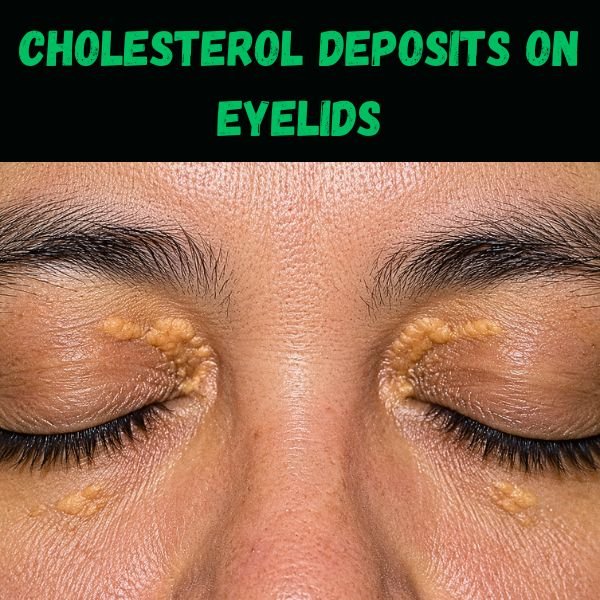
A few months ago, one of my patients came into my clinic worried about small yellow bumps that had appeared on her upper eyelids.
“They don’t hurt,” she said, “but they look odd. Are they some kind of allergy?”
What she had were cholesterol deposits, something many people mistake for simple skin growths or age spots.
If you’ve noticed something similar – small yellowish patches or even a faint gray ring around your eye – let me help you understand what’s happening and what you can do about it.
What Are Cholesterol Deposits in the Eyes?
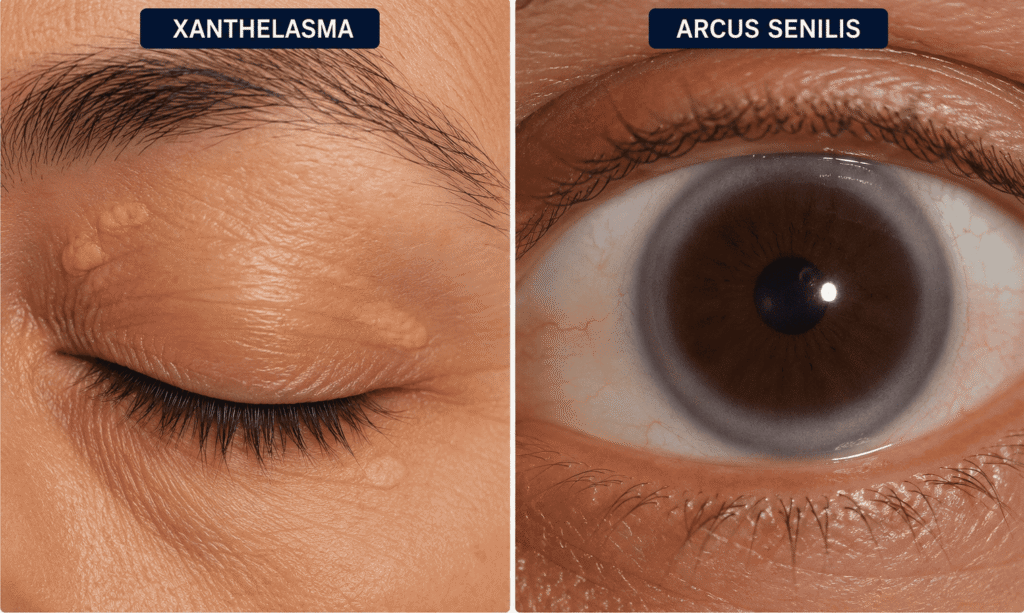
Cholesterol deposits are small, yellowish bumps or flat patches that usually appear on or near the eyelids. In medical terms, we call them xanthelasma. You might see them near the inner corners of your eyes, often on both sides.
There’s another form too – a grayish-white ring around the colored part of your eye called arcus senilis. That one tends to appear as we age, but in younger people, it can signal higher cholesterol levels.
These deposits form when excess cholesterol or fats from your bloodstream build up under your skin or around the eye. They aren’t dangerous on their own, but they can be a red flag for what’s happening inside your body.
Why Do They Happen?
High Cholesterol Levels
The most common cause of these deposits is high cholesterol, especially the “bad” kind known as LDL (low-density lipoprotein). When LDL levels rise, the body sometimes stores that excess fat in unexpected places – including under your skin.
Lifestyle and Health Conditions
Cholesterol deposits can also show up in people even with normal blood cholesterol levels, if they have:
- Diabetes
- Hypothyroidism (low thyroid function)
- Liver or kidney problems
- A family history of high cholesterol
Smoking, lack of exercise, and diets high in fried or processed foods can make the problem worse.
Age Factor
If you’re older, you might see a light ring around your cornea – that’s arcus senilis. In older adults, it’s often just part of aging and not a reason to worry. But if you’re under 40 and you notice that ring, it’s definitely worth checking your cholesterol.
What to Watch Out For
Here’s what you might see:
- Yellow or creamy-colored bumps on your upper or lower eyelids.
- Flat or slightly raised patches that feel soft to the touch.
- A pale ring around the colored part of your eye (the iris).
Most of the time, these deposits don’t hurt, itch, or blur your vision. But their presence could mean your cholesterol levels are higher than normal, even if you feel completely fine otherwise.
How Doctors Diagnose Cholesterol Deposits
Diagnosing these is usually straightforward. I can often tell what they are just by looking. But to be sure, I usually order a lipid profile test, which measures your total cholesterol, LDL (“bad”) cholesterol, HDL (“good”) cholesterol, and triglycerides.
In some cases, if you have other health conditions, we might check your thyroid, liver, or blood sugar levels too.
These tests help confirm whether the spots are purely cosmetic or a sign of a deeper health issue.
Treatment Options
The good news is, these deposits are harmless – but many people want to remove them for cosmetic reasons or because they’re a constant reminder of their cholesterol levels.
1. Treating the Root Cause
If your cholesterol is high, we start by tackling that. Your doctor might suggest:
- A healthier diet (more vegetables, whole grains, and lean proteins)
- Regular exercise (even brisk walking helps)
- Reducing saturated and trans fats
- Stopping smoking and limiting alcohol
Sometimes, medications called statins are prescribed to help lower cholesterol levels safely.
2. Cosmetic Removal
If the spots bother you, there are safe removal options:
- Laser therapy: quick and effective with minimal scarring.
- Cryotherapy: freezing the deposits so they fall off naturally.
- Surgical removal: in rare cases, when the patches are larger or deeper.
It’s very important not to try removing them at home – squeezing, scraping, or using “DIY” acid peels can cause scarring and even eye injury.
3. Managing Arcus Senilis
If you have a grayish ring around your cornea, don’t worry – it usually doesn’t affect your vision or need removal. Still, if you’re under 40, it’s a sign to get your cholesterol checked regularly.
Can You Prevent Cholesterol Deposits?
Absolutely – prevention is always better than cure.
Here’s what I tell my patients:
- Eat smart: Cut down on fried foods, red meat, and high-fat dairy. Choose fish, olive oil, and nuts instead.
- Move daily: Even 30 minutes of walking can lower cholesterol and boost your heart health.
- Quit smoking: Nicotine damages blood vessels and worsens cholesterol buildup.
- Limit alcohol: Excess drinking raises triglyceride levels.
- Get regular checkups: If high cholesterol runs in your family, test your levels every 6–12 months.
Remember, cholesterol deposits don’t form overnight – they’re a gradual build-up that can often be reversed or slowed down with lifestyle changes.
When to See a Doctor
You should visit a dermatologist or an eye doctor if:
- You notice new yellow patches near your eyes.
- You’re under 50 and have a gray or white ring around your iris.
- You have other risk factors – high blood pressure, diabetes, or obesity.
- The bumps are growing, spreading, or affecting how your eyelids move.
Even if you feel fine, getting checked is worth it. Your eyes are often the first place your body shows signs of what’s happening inside.
Conclusion
Your eyes don’t just show emotion – they also reveal your health. Cholesterol deposits might look harmless, but they can be early warning signs that your heart and arteries are under stress.
With the right diet, exercise, and regular checkups, it’s possible to lower cholesterol and prevent these deposits from coming back.
So next time you look in the mirror and notice something new around your eyes, don’t panic – but don’t ignore it either. Your body could be trying to tell you something important.
Frequently Asked Questions
Q. Are cholesterol deposits dangerous?
A. Not directly. But they can indicate high cholesterol, which increases your risk for heart disease and stroke.
Q. Can these deposits go away on their own?
A. Sometimes, small ones may fade if you lower your cholesterol levels. Larger ones usually need medical removal.
Q. Do cholesterol deposits affect vision?
A. No, they don’t usually affect your sight — but they’re still a health signal worth checking.
Q. Can young people get them?
A. Yes, especially if high cholesterol runs in the family or lifestyle factors are involved.