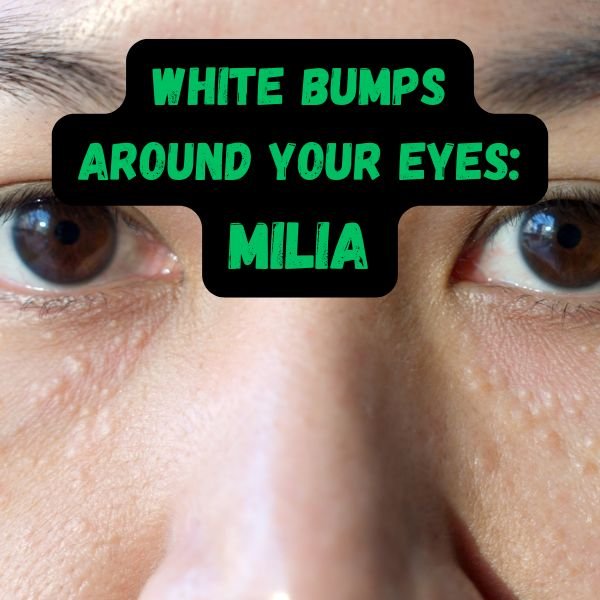
Have you ever noticed tiny white bumps around your eyes that just won’t go away?
If you’re like most people, your first thought was probably, “It’s a pimple.” And if you’re really like most people, you may have tried squeezing it, only to discover that nothing happened.
No matter how much pressure you applied, the bump stayed exactly where it was.
The reason? It might not be a pimple at all.
Many of these stubborn little bumps are actually something called milia. They’re very common, harmless, and often misunderstood. Let’s take a closer look at what milia are, why they develop, and why trying to pop them usually isn’t the best idea.
What Are Milia?
Milia are tiny white or yellowish bumps that form just beneath the surface of the skin. They are usually very small, often about the size of a pinhead, and commonly appear around the eyes, cheeks, nose, and forehead.
Oil, bacteria, or clogged pores do not trigger milia.
Instead, they are small cysts filled with keratin, a protein naturally found in your skin, hair, and nails. Normally, dead skin cells rise to the surface and shed naturally. However, sometimes these cells become trapped beneath the skin instead of being released.
When this happens, keratin collects inside a tiny pocket, creating the small white bump that we recognize as a milium (the singular form of milia).
Why Do Milia Appear Around the Eyes?
One reason milia are so common around the eyes is that the skin in this area is extremely thin and delicate.
Because the skin is thinner, it can be more prone to trapping dead skin cells. However, there are several factors that may contribute to the development of milia.
1. Heavy Skincare Products
Rich eye creams, thick moisturizers, and certain cosmetic products may contribute to the buildup of dead skin cells in some people. This doesn’t mean you should stop moisturizing, but choosing products appropriate for your skin type can help.
2. Sun Damage
Long-term exposure to ultraviolet (UV) rays can affect the skin’s natural ability to renew itself. Over time, this may increase the likelihood of dead skin cells becoming trapped.
3. Skin Injury or Irritation
Milia can sometimes appear after skin injuries such as burns, rashes, blistering conditions, or cosmetic procedures. As the skin heals, keratin can become trapped beneath the surface.
4. Genetics
Some individuals simply seem more likely to develop milia than others. Even with a good skincare routine, they may continue to experience them periodically.
The important thing to remember is that milia do not necessarily mean you’re doing something wrong. They can occur even in people who take excellent care of their skin.
Not Every White Bump Is Milia
This is an important point that many people don’t realize.
Several harmless skin conditions can resemble milia, especially around the eyes. They should be identified because the treatments offered for these conditions are different from milia.
Syringomas
Syringomas are small, flesh-colored or slightly yellow bumps that develop from sweat glands. They often appear in clusters under the eyes and may look very similar to milia from a distance.
Sebaceous Hyperplasia
Sebaceous hyperplasia are benign yellowish growths that arise from sebaceous glands and are commonly confused with milia.
Other conditions like warts and molluscum contagiosum can also look like milia.
If you’ve been treating what you believe is milia and the bumps aren’t improving, it may be worth consulting a dermatologist.
Sometimes the question isn’t how to treat milia. The real question is whether the bump is actually milia in the first place.
Why Squeezing Milia Doesn’t Work
This is probably the most common mistake people make.
When you squeeze a pimple, you are usually trying to remove oil, bacteria, and debris from an inflamed pore.
Milia are completely different.
The keratin inside a milium is compact and enclosed within a tiny cyst wall. There is no easy pathway for the contents to escape.
As a result, squeezing often accomplishes very little.
Instead, it can lead to:
- Redness
- Swelling
- Skin irritation
- Infection
- Scarring
The skin around the eyes is particularly delicate, making it even more vulnerable to damage.
If you’ve ever wondered why a white bump wouldn’t pop despite repeated attempts, the answer is simple: it wasn’t designed to come out that way.
How Are Milia Treated?
The good news is that milia are harmless.
In many cases, they disappear on their own over time without any treatment.
For persistent or bothersome milia, a dermatologist may recommend professional removal. This is typically done using sterile instruments and specialized techniques that safely release the trapped keratin while minimizing the risk of scarring.
Depending on the situation, certain skincare ingredients may also help improve skin turnover and reduce the likelihood of new milia forming.
These may include:
- Retinoids
- Gentle exfoliating acids
- Regular sunscreen use
However, treatment should always be approached carefully, especially around the eyes.
Aggressive scrubbing, picking, or experimenting with home extraction methods can often do more harm than good.
The Bottom Line
Tiny white bumps around the eyes are often mistaken for pimples, but many are actually milia.
These small keratin-filled cysts form when dead skin cells become trapped beneath the skin’s surface. While they may be frustrating, they are harmless and usually don’t respond to squeezing or picking.
It’s also important to remember that not every white bump is milia. Conditions such as syringomas and trichoepitheliomas can look very similar and may require a professional diagnosis.
If you’re unsure about a persistent bump or are considering treatment, speaking with a dermatologist is always the safest option.
Understanding what’s happening beneath your skin is the first step toward making informed decisions about your skincare and avoiding treatments that may do more harm than good.
Frequently Asked Questions (FAQ)
Are milia the same as whiteheads?
No. Whiteheads are a form of acne caused by clogged pores containing oil and debris. Milia are tiny cysts filled with keratin and are not considered acne.
Can I remove milia at home?
It’s generally not recommended. Attempting to squeeze or extract milia yourself can lead to irritation, infection, and scarring, especially around the eyes.
Do milia go away on their own?
Yes. Many milia disappear naturally over time without treatment.
What causes milia?
Milia occur when dead skin cells become trapped beneath the skin instead of shedding normally. Factors such as sun damage, skin injury, heavy skincare products, and genetics may contribute.
How can I tell if it’s milia or something else?
It can be difficult to tell by appearance alone. Conditions such as syringomas and trichoepitheliomas may look similar. If you’re uncertain, a dermatologist can provide an accurate diagnosis.
Are milia dangerous?
No. Milia are harmless and do not increase the risk of skin cancer or other serious health problems.
Can skincare products prevent milia?
While no product can completely prevent milia, gentle exfoliation, retinoids, and daily sun protection may help support healthy skin turnover and reduce the likelihood of new lesions forming.