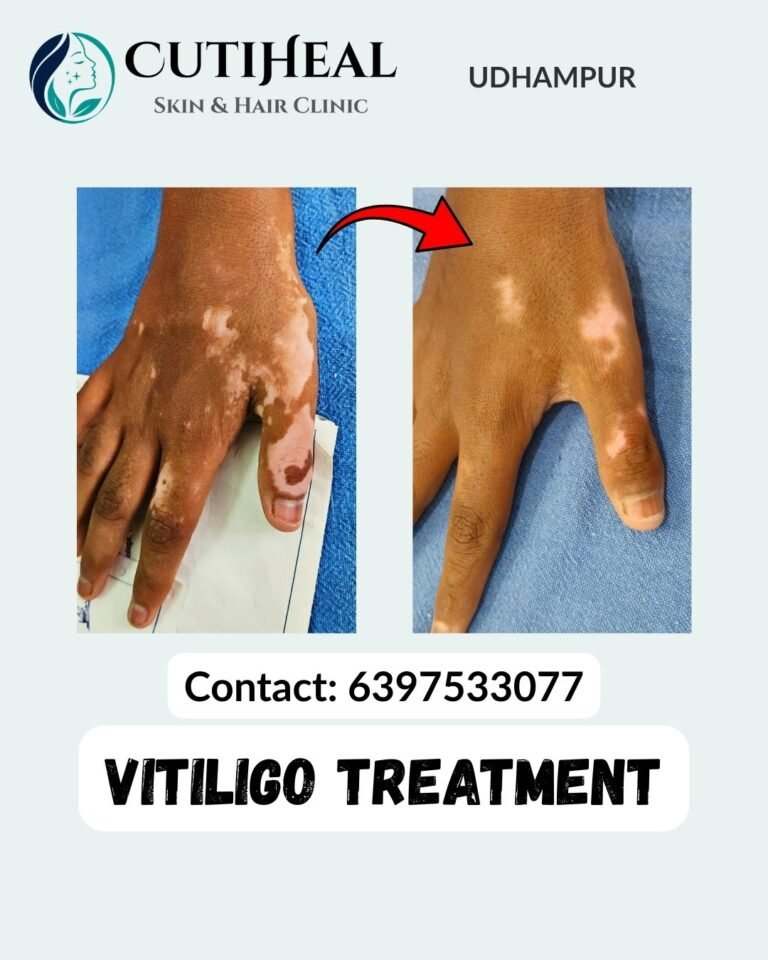
Vitiligo is a pigmentary disorder that causes white patches on the skin. Many patients in Udhampur seek specialist consultation after noticing gradually enlarging areas of depigmentation.
Understanding Vitiligo
Vitiligo develops due to loss of melanocytes, the cells responsible for producing skin pigment. The condition is not contagious and cannot spread through physical contact.
Common Areas Affected
- Face
- Hands
- Feet
- Lips
- Around body openings
Some body
Diagnosis and Evaluation
A detailed dermatological examination is performed. Wood’s lamp examination may help assess disease extent.
Vitiligo Treatment Options
Treatment depends on disease activity, duration, and body site involved. Options may include:
- Topical therapy
- Phototherapy
- Combination treatment approaches
What If My Vitiligo Is Not Responding to Treatment?
One of the most frustrating aspects of vitiligo is that certain body areas are notoriously difficult to treat. While many patients achieve satisfactory repigmentation on the face and trunk, areas such as the hands, feet, fingers, toes, and lips often respond more slowly and may remain resistant despite prolonged treatment.
If you have been taking medications, using topical treatments, or undergoing phototherapy for a long time without satisfactory improvement, it does not necessarily mean that all treatment options have been exhausted. The first and most important goal in vitiligo management is to achieve disease stabilization. Active vitiligo that is still spreading requires medical treatment aimed at controlling disease activity before any advanced procedures are considered.
Once vitiligo has remained stable for an appropriate period and your dermatologist determines that the disease is no longer progressing, additional treatment options may become available. In selected patients with stable vitiligo, surgical treatment techniques can be considered to help restore pigmentation in resistant areas. At CutiHeal clinic, we offer vitiligo surgery for carefully selected candidates after a thorough clinical evaluation.
It is also important to understand that surgery is not the only option. Several non-surgical approaches may still produce meaningful repigmentation, even in patients who have previously experienced limited success. The choice between surgical and non-surgical treatment depends on factors such as disease stability, body site involved, duration of vitiligo, age, and previous treatment response.
Unfortunately, many patients become overwhelmed by conflicting advice from the internet, social media, or non-specialist sources. Vitiligo treatment should always be individualized and guided by a qualified dermatologist. What works for one patient may not be suitable for another.
If your vitiligo has stopped responding to conventional treatment, or if you have stable vitiligo affecting difficult areas such as the hands, feet, or lips, schedule a consultation with our dermatology team. We can assess whether advanced non-surgical therapies or vitiligo surgery may be appropriate for your specific condition.
Looking for Options Beyond Routine Treatment?
If you have stable vitiligo and are exploring advanced treatment options, contact CutiHeal clinic to discuss whether you may be a candidate for vitiligo surgery or other specialized repigmentation procedures.
Vitiligo Care in Udhampur
We welcome patients from Udhampur, Chenani, Batote, Ramnagar, Doda, Kishtwar, Ramban and nearby areas seeking professional acne management. Early evaluation can be beneficial.
Frequently Asked Questions
Q. Is vitiligo curable?
A. Treatment can improve repigmentation in many cases, although results vary.
Does vitiligo spread to others?
A. No. Vitiligo is not infectious.
Q. Is sunlight harmful?
A. Sun protection is important because depigmented skin burns easily.