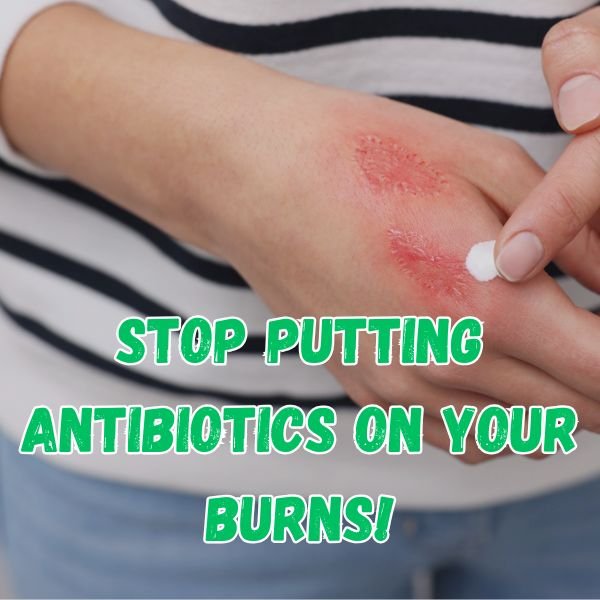
You accidentally touch a hot pan or spill some boiling water — ouch. Your first instinct might be to grab that antibiotic ointment from the medicine cabinet and smear it on the burn. It seems logical: “this will prevent infection, right?” But believe it or not, for many minor burns, that antibiotic ointment may not help — and could even cause unintended problems.
As a dermatologist, I’m here to explain why you should think twice before applying antibiotic ointments, what the research really says, and exactly what you should do instead for safe, effective burn care.
What Happens When You Get a Minor Burn
When your skin is burned (especially a superficial or minor burn), a few things happen: the top layer of the skin (the epidermis) is damaged, the skin’s protective barrier is broken, and there’s some inflammation (redness, heat, maybe pain).
Because of that, you may worry infection will sneak in. It’s natural to assume that applying an antibiotic ointment will “cover your bases.”
But here’s the thing — most small burns heal just fine on their own, provided they’re kept clean, moist, and protected.
What the Evidence Says About Topical Antibiotics for Wounds and Burns
Let’s look at what research shows.
- The American Academy of Dermatology (AAD) says: “As long as the wound is cleaned daily, it is not necessary to use an antibiotic ointment. Apply plain petroleum jelly to keep the wound moist.”1
- A review of topical antimicrobial agents for burn wounds found that many guidelines favor silver-containing dressings over antibiotic ointments or antiseptics.2
- For minor burns, the reputable National Library of Medicine’s MedlinePlus advice: “You may put a thin layer of ointment, such as petroleum jelly or aloe vera, on the burn. The ointment does not need to have antibiotics in it. Some antibiotic ointments can cause an allergic reaction.”3
In short: for typical small, clean burns, the evidence doesn’t strongly support routine use of antibiotic ointments. They aren’t harmful in every case, but they aren’t always helpful either – and sometimes they bring extra risks.
Why Using Antibiotic Ointment on Burns Can Be Harmful or Unhelpful
Here are the main concerns:
- Allergic reactions & irritation: Many over-the-counter antibiotic ointments contain neomycin, bacitracin, or polymyxin. These can trigger contact allergy or irritation, especially with repeated use.4
- False sense of security: Slapping on an antibiotic ointment might make you feel “covered,” but if the burn is deep, large, dirty, or shows signs of infection, it isn’t enough. You could delay seeing a doctor.
- Antibiotic stewardship: Using antibiotics when not needed contributes to wider issues like antibiotic resistance.
So yes – the habit of defaulting to antibiotic ointment for any burn may be doing more harm than good in some cases.
When Might Antibiotic Ointment Be Appropriate?
That said –
There are situations where stronger care is needed:
- A burn that is deep (second-degree partial-thickness with large area, or third-degree) or serious in location (face, hands, feet, genitals) often needs professional burn care.
- A burn that’s dirty, contaminated (chemicals, electricity, burst blisters), or shows signs of infection (pus, increased redness/swelling, fever) definitely warrants medical attention and possibly topical or systemic antibiotic treatment.
- Burns in immunocompromised individuals, or those with poor circulation/diabetes, may require more aggressive wound management, including antibiotics.
- In certain hospital settings, topical antimicrobials like Silver sulfadiazine are used routinely for deep or high-risk burns, but those are not typical home minor burns.
So the key takeaway: if the burn is small, clean, and superficial, you don’t need antibiotic ointment. But if it ticks the “high-risk” boxes, see a medical professional.
What to Do Instead – Evidence-Based Burn Care at Home
Here’s your go-to plan for a typical minor burn (small size, clean, superficial):
- Cool it: Immediately run cool (not ice-cold) water over the burn for about 5-10 minutes. This helps stop the heat damage.
- Clean gently: Wash your hands, then gently clean the burn area with mild soap and water; pat dry with a clean towel.
- Apply a basic ointment: Use a thin layer of plain petroleum jelly (for example) to keep the area moist. Studies show that keeping a burn moist promotes healing and reduces scabbing and scarring.
- Cover it: Use a non-stick sterile dressing or adhesive bandage to protect the burn from friction, dirt, and further damage. Change the dressing daily or when it gets dirty or wet.
- Watch for signs of trouble: If you notice increasing pain, redness, swelling, pus, or fever — those could be infection signs; get medical help.
- Avoid bursting blisters: If a blister forms, leave it intact if possible because it provides natural protection. If it opens, clean and dress it.
- Keep it safe: Avoid sun exposure, don’t apply butter, oil, or home remedies that aren’t clean, and allow gentle movement of nearby limbs so skin doesn’t stiffen.
- Pain relief: Over-the-counter pain relievers (like ibuprofen or acetaminophen) can help, following dosage instructions.
Following this approach generally gives a minor burn the best chance to heal well, without the cost/risk of unnecessary antibiotic ointments.
Conclusion
Burning yourself can feel dramatic — but for many minor (small, clean, superficial) burns, the best care is simple: cool the area, clean gently, keep it moist, protect it. Reach for plain petroleum jelly, not automatically the antibiotic ointment. More isn’t always better — in fact, using antibiotic ointment by default may complicate things. Next time a small burn happens, you’re equipped with what the science says. And if the burn is serious, deep, large, or shows signs of infection — see a professional rather than relying on self-medication. Your skin will thank you.